
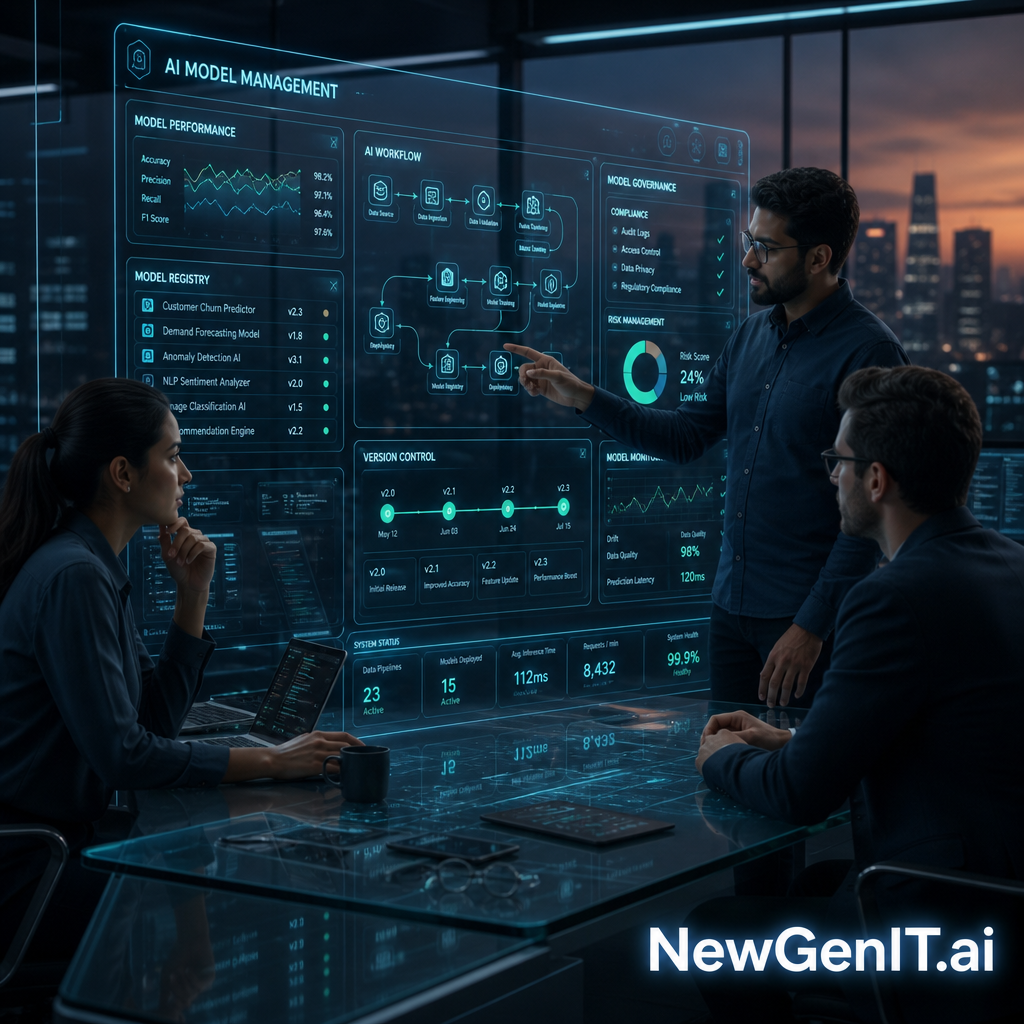
In the rapidly evolving technology landscape, South African enterprises are increasingly adopting artificial intelligence (AI) to gain competitive advantages across industries. Yet, contrary to earlier practices that relied heavily on deploying a single AI model for a business task, a growing number of organisations now manage several AI models concurrently in production. This paradigm shift is driven by the need for specialised capabilities tailored to specific business functions and the demand for operational resilience in the face of growing data complexity.
This article delves into why enterprises, particularly in South Africa’s unique business environment, are embracing multiple AI models, the challenges of managing these environments, and practical strategies for IT leaders, engineers, and decision-makers to implement efficient, compliant, and scalable AI operations.
The Growing Imperative for Multi-Model AI Deployments
Global industry studies by McKinsey & Company and Deloitte Insights reveal that over 70% of enterprises have progressed to running multiple AI models in production. In South Africa, this trend is especially pronounced in sectors such as finance, retail, telecommunications, and mining, where diverse operational needs demand tailored AI solutions.
For example, in the banking sector operating from Johannesburg’s financial hubs like Sandton, institutions deploy multiple AI models simultaneously, fraud detection models to combat rising cybercrime, customer segmentation algorithms for personalised marketing, and credit risk scoring models to improve lending decisions. Similarly, in the agricultural sector in provinces like KwaZulu-Natal and the Western Cape, AI models for crop yield prediction coexist with others focused on supply chain optimisation.
South African companies benefit from multi-model architectures for several core reasons:
- Specialisation and Precision: Different AI models excel in specific tasks, from natural language processing (NLP) for customer service chatbots to anomaly detection for fraud.
- Operational Resilience: Running multiple models reduces dependency on a single algorithm, mitigating risk if one model underperforms or fails.
- Agile Innovation: Enterprises can rapidly experiment and deploy custom models designed for unique datasets or dynamic business objectives.
What Makes Managing Multiple AI Models Challenging?
While the business value of multi-model AI environments is clear, operational complexities cannot be understated, particularly given South Africa’s market realities and regulatory context.
- Model Lifecycle Complexity: Managing several models means handling diverse development timelines, updates, monitoring, and deprecation processes simultaneously.
- Version Control and Deployment: Enterprises must track versions meticulously, ensuring seamless rollbacks and performance improvements without disruption.
- Monitoring Accuracy and Fairness: Continuous performance evaluation is critical to detect data drift or bias, especially important under South Africa’s Protection of Personal Information Act (POPIA), which mandates data privacy and fairness in automated decisions.
- Infrastructure Constraints: South African businesses face unique infrastructure pressures such as load-shedding disruptions and variable connectivity across regions (from urban centres like Cape Town to rural areas). Ensuring availability and latency of AI services under these conditions is a significant challenge.
- Compliance and Governance: AI models processing personal and financial data must comply with POPIA and sector-specific regulations, necessitating audit trails, explainability, and strict access control.
Best Practices for Managing Multi-Model AI Environments in South Africa
South African CTOs and AI leaders can navigate these challenges by adopting a set of practical, locally-aware strategies to optimise AI model management.
1. Centralised AI Model Management Platforms
Implementing centralized platforms that serve as a single source of truth for all AI models in production enables teams to streamline deployment, monitoring, and updates. These platforms offer capabilities such as model registries, version control (tracking iterations like v2.0 through v3.5), and performance dashboards that allow rapid identification of failing or underperforming models.
For example, a Johannesburg-based fintech firm may deploy a platform that integrates with their CI/CD pipelines, automating retraining and redeployment triggered by model drift, while providing audit logs required for POPIA compliance.
2. Strong Governance Frameworks Aligned with POPIA
Enterprises need explicit policy frameworks to govern AI model validation, fairness assessments, and risk management. South African regulations necessitate transparency in how models use personal data and make automated decisions. Governance frameworks should enforce:
- Regular audits of AI models for accuracy, bias, and compliance
- Access controls limiting data and model usage to authorised personnel
- Comprehensive documentation and explainability to meet legal and customer scrutiny
3. Automating Continuous Testing and Retraining Pipelines
Given load-shedding and connectivity volatility, automation reduces the operational overhead and human error risks. Automated pipelines can run scheduled or event-driven model validation against fresh data samples. Retraining triggers might include significant drops in recall rates or detection of concept drift, a common problem in dynamic South African markets with fluctuating consumer behaviour.
4. Ensuring Cross-Functional Collaboration
Effective management demands collaboration across data scientists, software engineers, and business units. For instance, a retail company in Cape Town might find value in weekly alignment meetings between AI teams focused on customer sentiment models and marketing departments to ensure that insights translate into targeted campaigns efficiently, while flagging any anomalies or compliance concerns early.
5. Infrastructure Optimisation for South African Realities
Load-shedding remains a barrier to continuous system availability. Businesses should architect AI workloads with resilience: deploying models in hybrid environments combining on-premises servers in Durban and cloud solutions hosted on South African data centres with SLAs that account for local power stability. Edge computing can also ensure key AI functions continue during intermittent cloud outages.
Realistic Examples and Practical Takeaways
Consider a national retail chain operating in multiple South African metros. Over 20 AI models support their operation, demand forecasting models adjust inventory dynamically, customer churn prediction models power loyalty programs, and fraud analytics protect payment systems. Proper versioning prevents conflicts, and automated retraining ensures models learn evolving patterns, especially in the run-up to high-volume periods like Black Friday or festive seasons.
A practical takeaway for IT leaders is budgeting realistically for AI infrastructure costs. Running multiple models in production adds to compute, storage, and support expenses, sometimes increasing AI budgets by 30% or more. Yet, these costs are offset by improved customer engagement and efficiency gains, making a strong case for investment.
The Path Forward for South African Enterprises
In summary, managing multiple AI models is no longer optional for forward-looking enterprises in South Africa, it’s a strategic necessity. By centralising model management, strengthening governance frameworks, automating testing and retraining, fostering cross-functional collaboration, and designing infrastructure aligned with local challenges like load-shedding, organisations can unlock the full potential of AI.
At NewGenIT.ai, we assist South African firms in deploying robust AI ecosystems that balance innovation, compliance, and local operational realities, helping to future-proof their businesses in an AI-driven economy.
Discussion
How is your organisation managing the challenges of operating multiple AI models in production? What tools, processes, or governance frameworks have proven effective in the South African context? Share your insights and experiences below.