Artificial Intelligence (AI) is no longer just a futuristic concept but a critical lever for competitive advantage, especially within South Africa’s dynamic business landscape. However, for CFOs and business leaders, the key challenge remains: where to invest in AI to generate the greatest financial returns and operational benefits. At NewGenIT, we understand that a generic approach to AI is insufficient in solving South Africa’s diverse business challenges , from managing operational disruptions due to load-shedding to ensuring compliance with POPIA regulations. This is why we champion an Operational AI Discovery approach that finds the highest-impact AI opportunities before any development begins, safeguarding budgets, accelerating value creation, and ensuring measurable results.
Understanding the South African Business Context
South African companies operate in a unique environment shaped by infrastructural constraints, regulatory demands, and market volatility. Load-shedding, for example, can disrupt core operations and strain supply chains, increasing operational risks and costs. Meanwhile, regulations like the Protection of Personal Information Act (POPIA) impose strict guidelines on data usage, influencing AI data strategies. Urban centres such as Sandton, Durban, and Cape Town serve as hubs for corporate activity and innovation, yet each faces distinct challenges, including power reliability, workforce diversity, and varying levels of digital maturity. Thus, AI solutions must be tailored to these realities, not applied as one-size-fits-all technology deployments.
What Is Operational AI Discovery?
Operational AI Discovery is a deliberate phase of exploration and analysis aimed at identifying AI applications with the highest potential for tangible business outcomes. Unlike rushing into AI development or pilots based on theoretical benefits or industry hype, this process involves a thorough assessment of your organisation’s core operations, workflows, and data environment.
- Data Ecosystem Mapping: We analyze existing datasets, structured and unstructured, to understand availability, quality, and privacy compliance according to POPIA.
- Workflow Analysis: Examining day-to-day processes to identify inefficiencies, bottlenecks, and areas vulnerable to external disruptions like load-shedding.
- Business Goal Alignment: Assessing financial goals, risk tolerance, and strategic priorities to ensure AI initiatives map directly to measurable KPIs.
This comprehensive groundwork produces a strategic AI roadmap that targets high-value use cases, such as predictive maintenance to reduce costly downtime in manufacturing plants around Durban, or intelligent customer support chatbots that improve client engagement in Cape Town’s competitive financial sector.
Why CFOs Should Prioritize AI Discovery
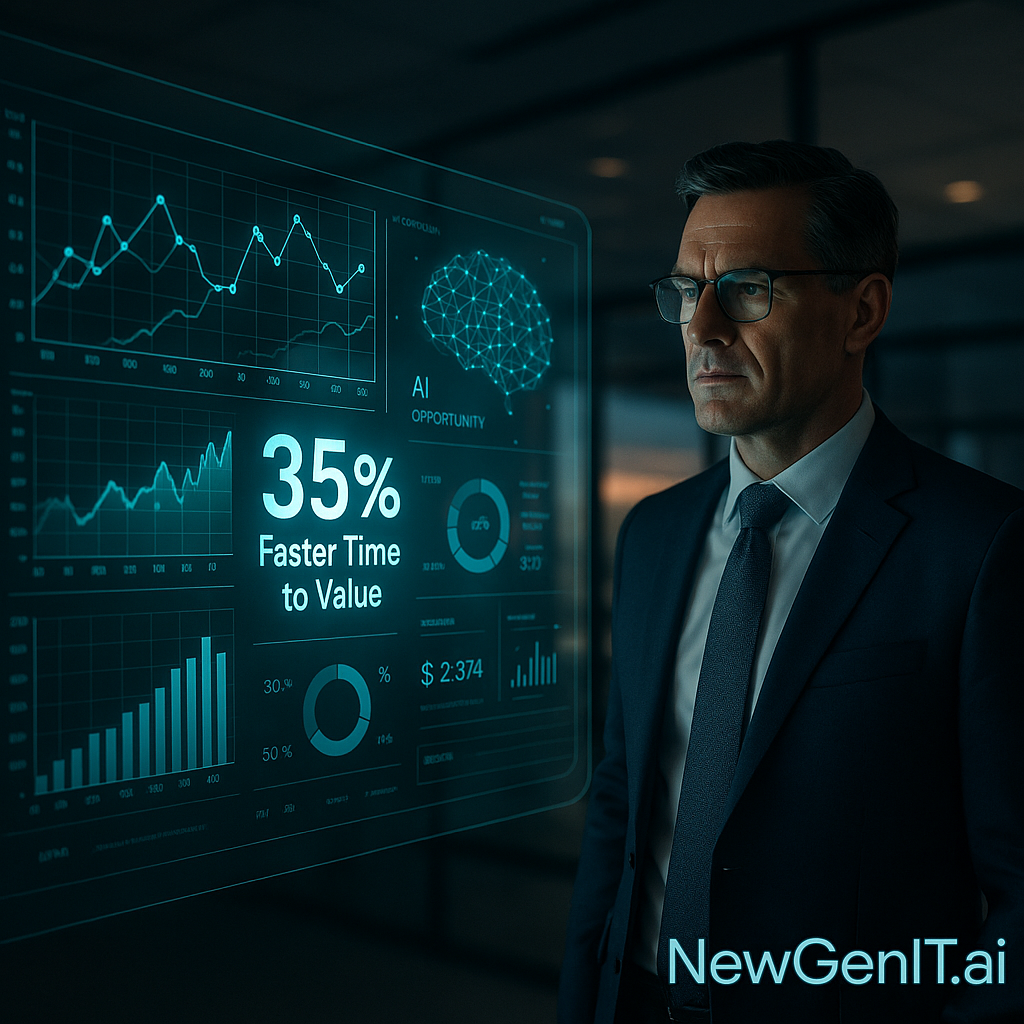
For CFOs, AI investments are scrutinized not only for innovation but for their financial impact. Operational AI Discovery translates complex AI potential into concrete, validated opportunities that carry lower risk and higher ROI. According to NewGenIT’s 2024 research, organisations that implement this discovery phase experience up to a 35% faster time to value and a significant reduction in AI project failure rates. This means quicker cost savings, accelerated revenue generation, and better risk mitigation.
In South Africa, where currency fluctuations and market uncertainties can impact budget planning, this approach ensures that every rand spent on AI is backed by data-driven validation rather than guesswork. For example, a South African logistics company implementing AI for route optimisation saw a 20% reduction in fuel costs and improved delivery times, improvements that directly affected the bottom line.
Addressing South African Operational Challenges with AI
Load-shedding remains one of the most pressing operational challenges. AI-driven predictive analytics can forecast load-shedding patterns and help businesses adjust processes, manage inventory, and schedule shifts proactively. For instance, a major Cape Town manufacturing facility employed AI to optimise production schedules around Eskom’s load-shedding times, reducing downtime by up to 15%, which translated into savings worth millions of rand annually.
Additionally, AI can enhance compliance with POPIA by automating data classifications and monitoring, ensuring sensitive information is protected without slowing operations. Financial services firms in Sandton have successfully adopted AI-powered data governance solutions to maintain regulatory compliance while improving customer trust and operational efficiency.
Realistic Metrics and Practical Steps for Implementation
South African enterprises seeking to adopt AI should take a staged, values-focused approach:
- Step 1: Conduct a tailored AI opportunity assessment with cross-functional teams including finance, IT, and operations.
- Step 2: Prioritise AI use cases based on estimated cost savings, revenue potential, and risk reduction aligned with business goals.
- Step 3: Build iterative pilots only on the highest-impact opportunities, using measurable KPIs to track progress.
- Step 4: Scale solutions with robust governance structures to ensure compliance, data privacy, and sustainable ROI.
On average, companies that follow this structured path can expect a return on AI investments within 12 to 18 months, an essential consideration for South African businesses managing tight budgets amidst economic uncertainty.
The Role of Forward-Deployed AI Engineers in South Africa
NewGenIT's model of deploying AI engineers directly within client environments in real-time provides unmatched value in the South African context. Our Forward-Deployed AI Engineers ensure rapid adjustments to operational changes, whether reacting to sudden load-shedding events or adapting to evolving POPIA requirements, taking a hands-on approach to delivering AI solutions where they matter most. This embedded collaboration accelerates development cycles and fosters deeper organisational buy-in.
Conclusion: Transform AI from a Risk to a Strategic Asset
AI is a transformational tool, but only if South African CFOs and business leaders adopt a methodical, discovery-first mindset. NewGenIT’s Operational AI Discovery approach not only uncovers the AI opportunities with the highest operational impact but also builds a clear, data-driven investment roadmap. This ensures AI initiatives are not speculative experiments but strategic, measurable drivers of sustainable growth and efficiency.
Discussion: How is your organisation currently identifying and prioritising AI projects? Are you taking a structured discovery approach to mitigate risk and ensure alignment with local challenges like load-shedding and POPIA compliance? We invite you to share your experiences or concerns below.