
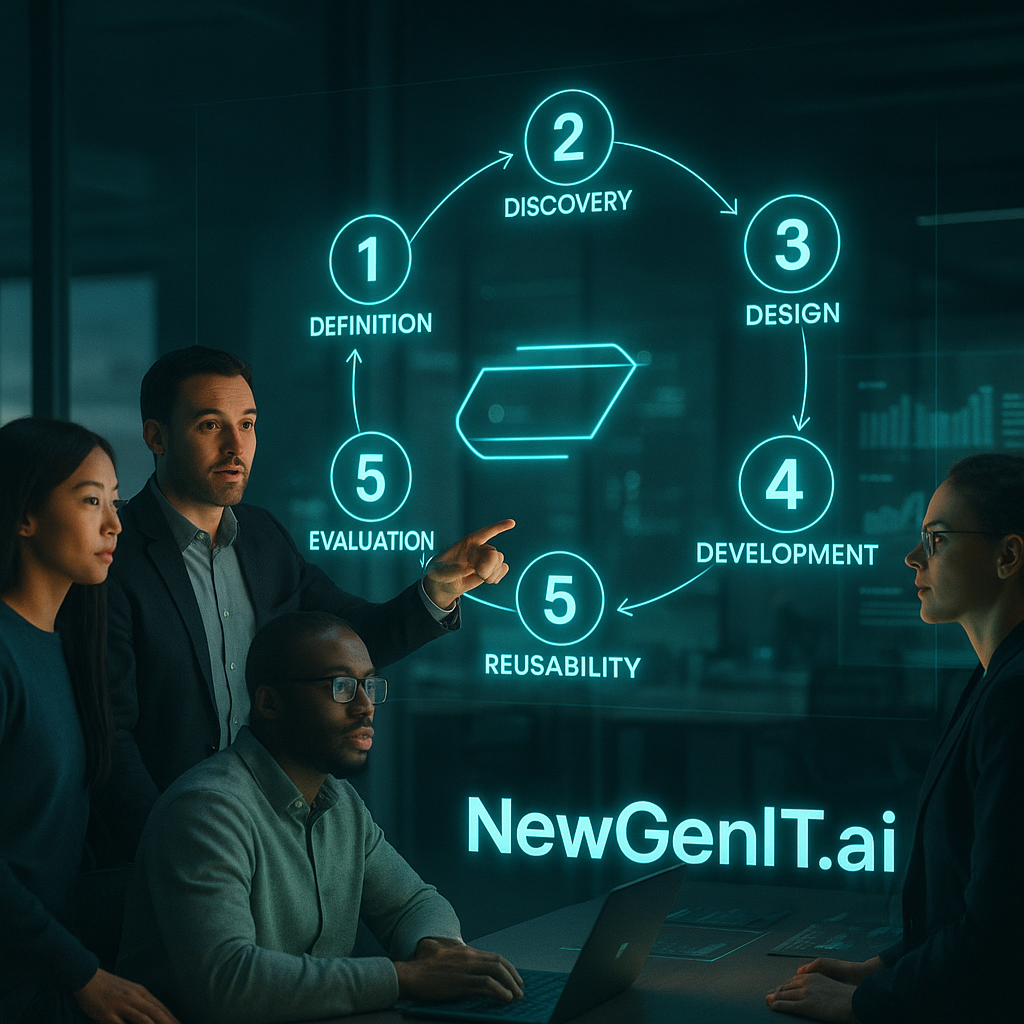
In the fast-paced digital world, South African technology distributors face the dual challenge of sustaining growth while navigating unique market pressures such as load-shedding, compliance with the Protection of Personal Information Act (POPIA), and evolving client demands in hubs like Sandton, Durban, and Cape Town. Traditional models of product distribution and solution delivery are no longer sufficient to maintain competitive advantage or scale effectively. This is where NewGenIT’s 6-phase Flexible Development and Execution (FDE) methodology becomes a game-changer, offering a structured, repeatable framework that not only accelerates innovation but also converts projects into reusable intellectual property (IP) to maximize return on investment and future-proof business operations.
Understanding the South African Market Context
South Africa’s IT sector is vibrant yet complex. IT leaders, engineers, and business decision-makers contend with frequent power outages that disrupt project timelines, stringent POPIA regulations that govern data management, and price-sensitive customers requiring proven solutions. Moreover, the rand’s fluctuating value affects budgeting and resource allocation. Distributors operating in economic hotspots such as Rosebank in Johannesburg or the tech corridors of Cape Town must leverage methodologies that optimize resource use while delivering consistent value to clients.
NewGenIT’s FDE methodology addresses these challenges head-on by fostering agility in solution development, thereby reducing exposure to delays and regulatory risks. By focusing on reusable IP, distributors can enhance operational efficiencies while managing costs more predictably despite forex volatility.
Phase 1: Discovery , Aligning Solutions with Client Needs
The discovery phase begins with in-depth engagement with clients to accurately identify pain points, opportunities, and business outcomes. In the context of South African IT distribution, this means understanding not only the technical requirements but also the environmental considerations such as business continuity under load-shedding conditions or compliance mandates under POPIA.
For instance, a distributor working with a financial services client in Sandton might uncover a critical need for a secure, offline-capable mobile application that complies fully with POPIA regulations. Such insights guide solution architecture and scope, ensuring relevance and impact.
Phase 2: Design , Scalable and Compliant Solutions
Once needs are clear, the design phase crafts tailored solutions with scalability and compliance front and center. South African businesses demand systems that can grow with them but are also robust against local operational risks. Designing for modularity ensures smooth iteration post-deployment.
This phase involves incorporating security protocols aligned with POPIA, redundancies for power outages, and integration capabilities with existing infrastructure commonly found in South African enterprises. Leveraging cloud services with local data centers may also be a priority, given data sovereignty concerns.
Phase 3: Development , Rapid, Quality-Focused Build
Development translates the design into functional systems using agile practices that enable rapid iterations and continuous feedback. Given the cost pressures in the local market, efficient resource utilization is critical.
For example, developing a fleet management platform for a transport business in Durban using reusable code modules can reduce build times by up to 30%, saving millions of rand annually. This agile development approach also accommodates sudden shifts in business priorities, which are common in dynamic sectors like retail or logistics.
Phase 4: Testing , Performance and Reliability Assurance
Robust testing ensures solutions meet performance standards and operate reliably under South African conditions, including intermittent power and varying network quality. Automated test suites simulate load-shedding scenarios and data encryption verification to certify compliance with POPIA.
Incorporating localised user acceptance testing (UAT) with South African clients mitigates rollout risks and improves final product acceptance.
Phase 5: Deployment , Seamless Integration into Ecosystems
Deployment focuses on integrating new solutions into client environments without disrupting operations. This is crucial in time-sensitive sectors such as financial services in Johannesburg’s financial district or manufacturing hubs around Cape Town, where downtime can result in significant revenue loss.
Strategic deployment schedules that account for national grid load-shedding cycles help minimize disruptions. Additionally, training local client teams and setting up support frameworks tailored to South African operating hours enhances ongoing success.
Phase 6: Reusability , Capturing IP to Drive Future Growth
The final phase captures learnings, components, and best practices to build reusable intellectual property assets for future projects. This reduces time-to-market for subsequent engagements and increases margin potential. In a market where new technology adoption can be cautious due to cost and risk, having proven, reusable solutions lends credibility and speeds client buy-in.
For example, a distributor who develops a compliant e-commerce platform framework can repurpose it across multiple retail clients in Cape Town and Durban, cutting development time in half and increasing profitability by an estimated 25-40%. Such efficiencies compound benefits over time, creating sustainable competitive advantages.
Practical Takeaways for South African IT Distributors
- Adopt structured methodologies: Frameworks like NewGenIT’s FDE provide a roadmap to navigate complex projects efficiently.
- Focus on IP reuse: Build components and knowledge repositories that reduce duplicative effort and cost.
- Consider local context: Embed compliance and operational contingencies in design and development phases to meet South African client expectations.
- Leverage agile development: Enable rapid iteration and adaptability in volatile market conditions.
- Plan deployments strategically: Account for load-shedding and optimize around client business patterns.
By implementing NewGenIT’s 6-phase FDE methodology, South African distributors can unlock previously untapped growth potential, enhance client satisfaction, and build resilient, scalable IT solutions tailored for the local environment.
Engage with Us
What are the biggest challenges your organisation faces in evolving solution delivery? How do you currently manage reuse of intellectual property across projects? Share your experiences or questions, and let’s explore how a focused, structured approach like NewGenIT’s FDE methodology can streamline your growth ambitions in South Africa’s unique IT landscape.