
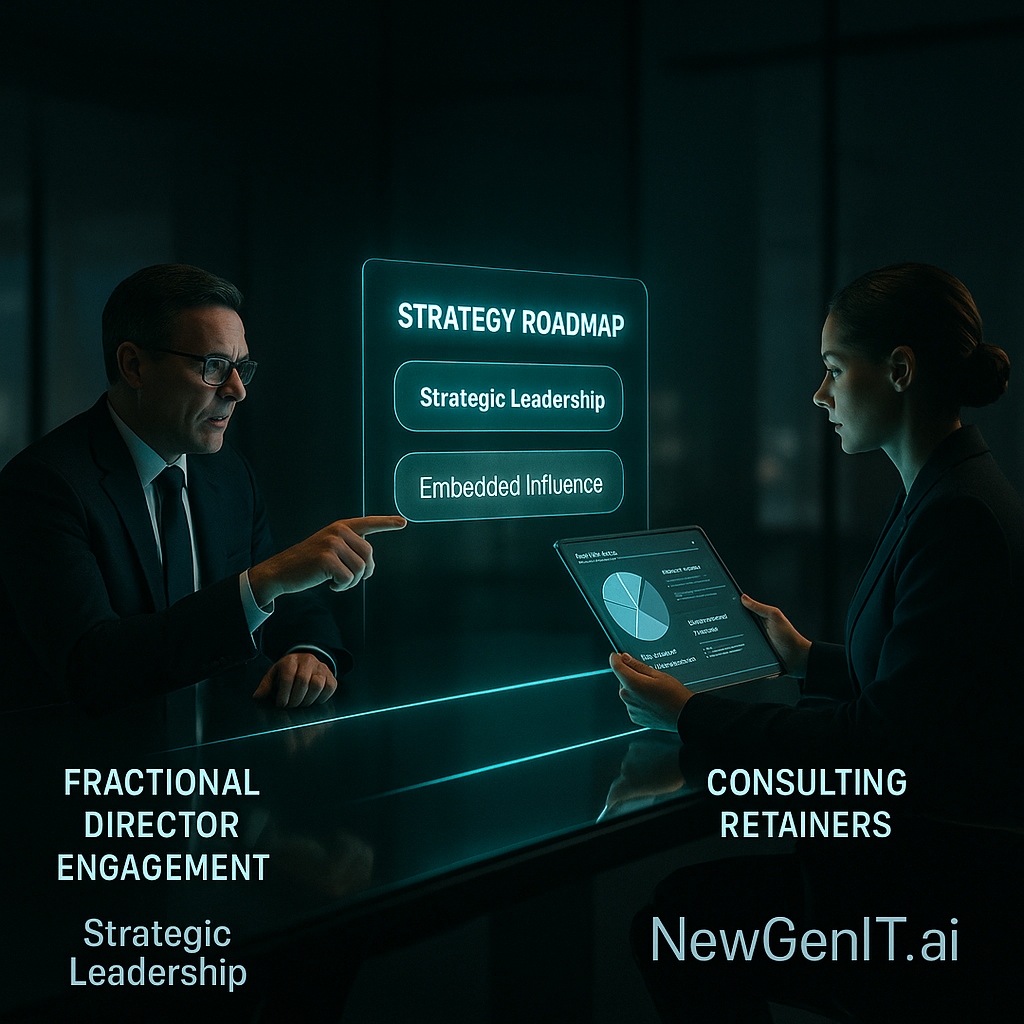
For boards in South Africa navigating a complex corporate landscape marked by challenges such as ongoing load-shedding, stringent POPIA regulations, and rapidly evolving market demands from Sandton to Durban, understanding the nature of external expertise engagements is critical. Two engagement models often surface in these discussions: Fractional Director Engagements (FDEs) and Consulting Retainers.
What Is a Fractional Director Engagement (FDE)?
A Fractional Director Engagement refers to bringing an experienced, C-level or executive leader into an organisation on a part-time or fractional basis. This leader becomes a vested member of the leadership team, responsible not only for contributing strategic advice but also for driving execution and making decisions. In the South African context, where business agility and resilience are paramount due to external pressures like power disruptions and evolving compliance standards, FDEs provide embedded leadership that aligns closely with the company culture and long-term vision.
For example, a mid-sized fintech startup in Cape Town facing rapid growth and complex regulatory compliance around data privacy could engage a Fractional Chief Technology Officer (CTO). This CTO would sit with the executive team, attend board meetings, and influence strategic initiatives alongside full-time leaders rather than providing advice from the sidelines. The cost of a fractional director in South Africa can range from R70,000 to R150,000 per month depending on expertise and time commitment , often more cost-effective than a full-time executive.
Consulting Retainers: What They Are and When to Use Them
A consulting retainer engagement is typically a contractual agreement where an organisation secures ongoing access to expert advice or support, often for a defined portfolio of projects or advisory services. Consultants remain external to daily operations and decision-making structures, focusing on problem-solving, compliance audits, or specialised interventions.
In South Africa’s business environment, consulting retainers are common for areas like POPIA compliance, IT infrastructure audits, or financial risk assessments. For instance, a Johannesburg-based manufacturing firm might retain an IT consulting company to review cybersecurity protocols and deliver quarterly recommendations to management, without the consultant influencing internal governance or strategy beyond their assignment. The costs are usually structured on a monthly or quarterly retainer from around R30,000 to R80,000 depending on scope and consultancy size.
Key Differences Between FDEs and Consulting Retainers
- Level of Integration: FDEs integrate within the executive team, contributing daily and being accountable. Consultants operate externally, providing targeted advice.
- Scope of Accountability: FDEs hold strategic accountability and influence decision-making; consultants typically deliver recommendations without direct responsibility.
- Engagement Model: FDEs work continuously on organisational priorities and become part of governance dynamics. Consulting retainers are task or project-focused with limited ongoing involvement.
- Financial Impact: FDEs represent an investment in sustainable leadership, often more costly but with greater long-term ROI; consulting retainers provide flexibility and lower monthly cost but with limited influence.
Why This Distinction Matters for South African Boards
South Africa’s unique challenges mean that boards must carefully evaluate which engagement model best supports their strategic objectives. Load-shedding-induced disruptions demand leaders who can anticipate, adapt, and embed continuity strategies rather than rely on ad hoc advice. Furthermore, compliance with legislation like POPIA requires not only understanding the regulations but embedding data governance practices deeply within the organisation's DNA , a role where fractional directors can be invaluable.
Additionally, market realities, such as currency volatility impacting budget forecasts in rand terms and the competitive landscape in economic hubs like Sandton and Cape Town, necessitate leaders who can balance strategic foresight with operational agility. A Fractional Director can commit to these ongoing demands, while consulting retainers might serve better for specialised advisory roles like cyber resilience or financial audits.
Financial Planning and Governance Implications
From a budgeting perspective, boards should anticipate that Fractional Director fees, while higher, often lead to more integrated leadership outcomes and potentially reduced execution risk. For example, an FDE working 2-3 days a week with a monthly fee of R100,000 could help avoid project overruns and costly strategy pivots, offsetting the initial outlay.
Governance dynamics also shift when a Fractional Director is part of the board or executive team, ensuring alignment and swift decision-making. A consulting retainer arrangement, by contrast, usually entails periodic reporting and limited influence on board decisions.
Practical Takeaways for South African IT and Business Leaders
- Assess Your Strategic Needs: If you require embedded leadership to navigate ongoing complexities and execute strategic growth, an FDE is preferable.
- Scope and Budget: For short-term, specialised advice or compliance support, consulting retainers offer flexibility with lower commitment.
- Compliance and Risk Management: Consider how deeply your external partner needs to embed within decision-making, especially around POPIA and cybersecurity.
- Local Market Conditions: Factor in how economic factors and operational risks like load-shedding impact your need for resilient leadership versus on-demand consulting.
Conclusion: Align Engagement Models with Your Long-Term Vision
Choosing between a Fractional Director Engagement and a Consulting Retainer is not merely a procurement decision; it shapes your organisation’s governance, agility, and capacity to sustain growth under pressure. For South African boards facing a turbulent economic backdrop, investing in fractional leadership often yields faster decision cycles, deeper stakeholder alignment, and stronger competitive positioning , as shown in global studies by Harvard Business Review and McKinsey.
Consulting retainers still hold value for focused expertise and compliance tasks, but the role is fundamentally advisory rather than integrative.
Ultimately, clarity on these engagement models enables boards in Johannesburg, Durban, and Cape Town to optimise leadership structures, budgeting, and strategic outcomes effectively.
Discussion
What has been your experience with Fractional Director Engagements versus Consulting Retainers at the board level? Have you found one model better suited to managing the unique challenges faced by South African businesses? Share your insights below.