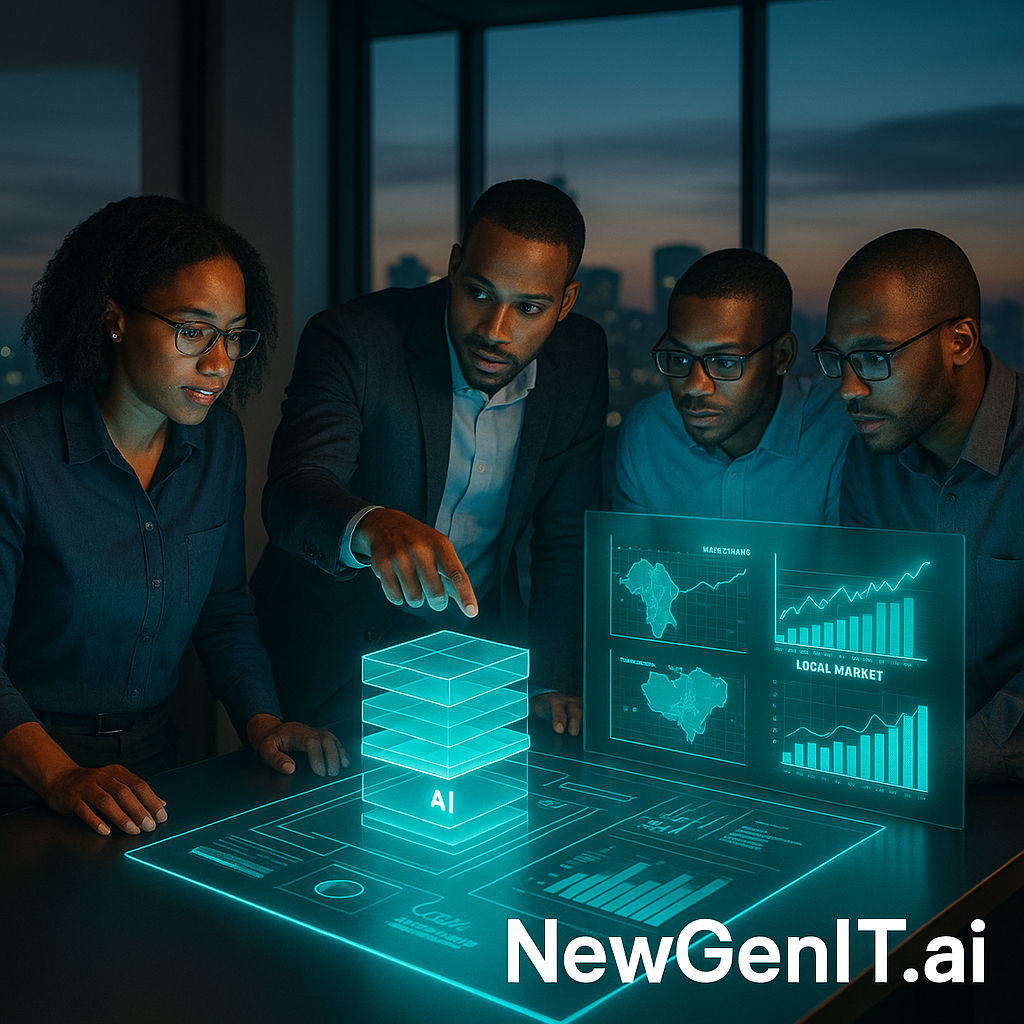
In the ever-evolving digital landscape, artificial intelligence (AI) has emerged as a transformative force across industries worldwide. South African businesses, ranging from fintech startups in Sandton to manufacturing firms in Durban, face unique challenges that generic imported AI vendor tools simply aren’t designed to handle effectively. From navigating the complexities of load-shedding to complying with the Protection of Personal Information Act (POPIA), contextual understanding of local nuances is crucial. This calls for a shift in strategy: South African enterprises need embedded AI engineers who understand not only AI technology but also the specific needs and constraints of the South African market.
The Limitations of Imported AI Vendor Tools in South Africa
Imported AI tools promise quick deployments and often come with compelling marketing about advanced algorithmic capabilities. However, these pre-packaged solutions frequently suffer from insufficient customization, leading to integration challenges and suboptimal outcomes for South African businesses.
For example, an AI vendor tool aimed at global retail chains might not easily incorporate local market data peculiarities such as seasonal shopping trends in Cape Town or purchasing behaviour shifts caused by load-shedding. Furthermore, SaaS-based AI platforms relying on cloud infrastructure can pose challenges due to South Africa’s intermittent power supply and patchy internet connectivity in some regions. The costs associated with bandwidth and data transfer from international servers also strain operational budgets when converted to rand (ZAR).
Embedded AI Engineers Bring Essential Local Market Expertise
Embedded AI engineers working on-site or within South African teams possess the invaluable advantage of deep contextual knowledge. They understand local economic drivers, consumer attitudes, and infrastructure limitations. This familiarity enables more accurate data modelling, better feature engineering, and responsive system design tailored for South African conditions.
Imagine a financial services firm in Johannesburg employing embedded AI experts who can tailor credit-scoring models with data reflecting the realities of informal employment or intermittent income patterns common in South Africa’s lower to middle-income segments. These nuances are often overlooked by standardized vendor tools but are critical for sound credit risk assessment. This capability directly improves loan approval accuracy and reduces default risks.
Regulatory Compliance: Navigating POPIA with Embedded Expertise
Data privacy is a crucial concern worldwide, and South Africa’s Protection of Personal Information Act (POPIA) sets stringent standards that demand localised compliance strategies. Imported AI vendor tools may not come fully equipped to address POPIA nuances, especially regarding data residency, consent management, and secure data handling.
Embedded AI engineers, well-versed in these legal frameworks, can architect AI systems to ensure data processing aligns with POPIA mandates , for instance, implementing anonymization techniques, establishing robust audit trails, and deploying secure data storage solutions compliant with South African legislation. For businesses, non-compliance can mean hefty fines running into millions of rand and serious reputational damage, making this expertise not just a technical requirement but a vital business safeguard.
Driving Innovation and Agility Through In-House AI Teams
According to industry analysts, businesses that maintain in-house AI engineering capabilities outperform their peers by achieving faster innovation cycles and improved return on investment (ROI). For South African enterprises, the ability to rapidly iterate AI models based on up-to-date localized data is a game-changer.
Consider a retail chain in Durban responding to market disruptions caused by sudden load-shedding schedules. In-house AI engineers can quickly update demand forecasting models or optimise supply chain logistics to mitigate risks and capitalise on emerging opportunities. This nimbleness is difficult to replicate when reliant on rigid, externally managed vendor tools with longer update cycles.
Moreover, embedded AI engineers foster greater ownership of AI initiatives, enabling closer collaboration between technical and business units. This integration leads to AI solutions that are tightly aligned with strategic goals and operational realities.
Cost and ROI Considerations in the South African Market
While imported AI vendor tools might appear cost-effective initially, hidden expenses around customisation, integration, and local compliance can escalate total cost of ownership (TCO).
Embedded AI engineers, although representing a higher upfront investment, enable more precise AI deployments that maximise operational efficiency and revenue growth. South African companies investing in AI talent have reported up to 30% improvement in project success rates and significant reductions in technical debt.
For instance, a South African logistics company employing embedded AI engineers reduced delivery route costs by 18% after customising predictive models to account for local traffic patterns, road conditions, and delivery windows adjusted for power outages. These benefits exemplify how local AI expertise directly translates into tangible business value.
Strategic Differentiation for Resellers: Embracing Bespoke AI Solutions
Resellers and system integrators operating in South Africa face a strategic imperative to pivot from purely pushing imported AI vendor packages towards championing tailored AI deployments supported by local engineering talent.
By positioning themselves as trusted partners providing embedded AI engineering services, resellers can differentiate their value proposition amid a competitive landscape. This approach enables them to offer solutions uniquely suited to South African industry sectors such as mining, banking, healthcare, and retail, each with distinct regulatory and operational environments.
Furthermore, proactive resellers can leverage this model as a platform for ongoing managed AI services, long-term client engagement, and continuous innovation , essential ingredients for sustainable business growth.
Conclusion: Embedding AI Engineering for South African Success
South African businesses confront multifaceted challenges that imported AI vendor tools are ill-equipped to resolve sustainably. Embedded AI engineers bring the critical local expertise needed to build AI systems that respond agilely to South Africa’s unique market dynamics, regulatory demands, and infrastructural realities.
In an environment marked by load-shedding, stringent data privacy laws, and evolving customer expectations, embedding AI engineering within your organisation or partner network is not just a technical advantage , it’s a strategic necessity. Forward-thinking South African enterprises and resellers poised to champion this approach will gain a competitive edge and unlock AI’s full transformative potential.
Discussion
How is your organisation approaching AI adoption in the context of South Africa’s unique challenges? Have you experienced benefits or challenges working with embedded AI engineers versus imported vendor tools? We invite you to share your insights and start a conversation on tailoring AI for South African success.
About NewGenIT.ai: As a leading forward deployed AI engineering firm in South Africa, we specialise in embedding AI expertise within local business ecosystems to deliver impactful, compliant, and scalable AI solutions.
