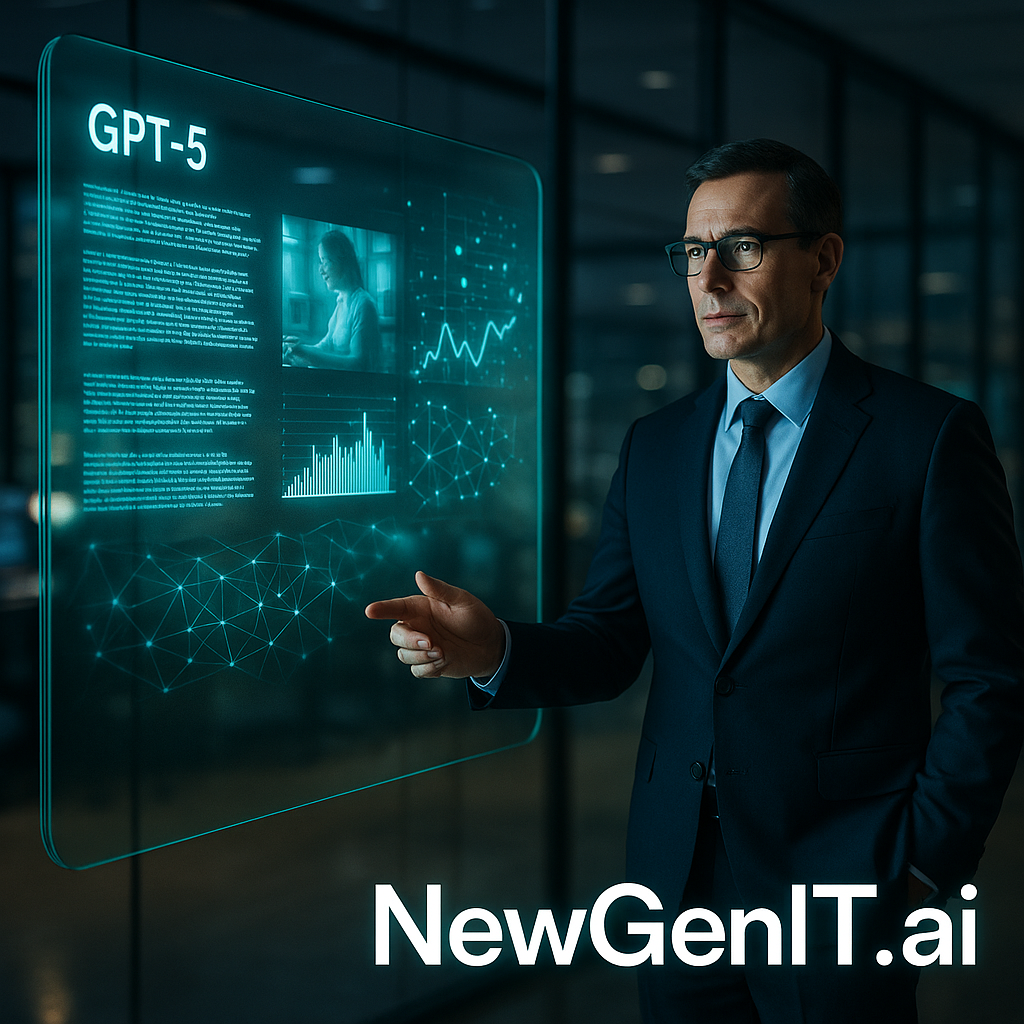
The release of OpenAI GPT-5 represents a pivotal advancement in artificial intelligence technology, especially for business environments eager to leverage AI for competitive advantage. This new generation of AI models brings substantial improvements in contextual understanding, multi-modal input processing, and operational reliability, setting new benchmarks for AI usage in production settings.
For South African IT leaders, engineers, and decision-makers navigating the complexities of the local economy , including load-shedding disruptions, stringent data protection requirements under POPIA, and the unique business landscapes of hubs like Sandton, Cape Town, and Durban , GPT-5’s enhanced capabilities offer both practical benefits and strategic opportunities.
Enhanced Accuracy and Contextual Awareness for Operational Excellence
One of GPT-5’s standout advancements is its increased accuracy and refined contextual awareness. Previous AI models often struggled with interpreting nuanced queries or ambiguous data, leading to potential miscommunications or errors in automated processes. GPT-5 significantly reduces this ambiguity, enabling far more precise customer interactions, support services, and operational automation.
In a South African call centre environment, for example, AI-powered agents driven by GPT-5 can better understand local vernacular, slang, and cultural contexts. This means fewer call escalations and improved customer satisfaction , a critical factor when competing in sectors such as telecommunications or banking. A typical medium-sized South African enterprise might see a reduction in average call handle times by up to 20%, translating into R500,000+ in annual cost savings just from improved AI-assisted support.
Multi-Modal Input: Bridging Text, Images, and Data
GPT-5’s ability to process and understand multi-modal inputs , including images alongside text and numerical data , enables a new class of AI applications ideal for South African industries like manufacturing, retail, and logistics.
Consider quality control in local factories, which frequently experience challenges due to inconsistent power supply and resource limitations. By integrating GPT-5 with visual inspection systems, enterprises can automate defect detection with far greater precision, even when environmental or lighting conditions are sub-optimal. This reduces reliance on manual inspection, cuts down defect rates by an estimated 15-25%, and subsequently lowers the cost of rework or product returns.
Retailers in Cape Town and Durban can similarly leverage multi-modal AI to assess in-store marketing displays and shelf compliance using smartphone images, ensuring adherence to brand standards without expensive manual audits. This capability is especially valuable given South Africa’s dynamic retail landscape and the need to react quickly to shifting consumer demands.
Robustness and Stability Amid South African Infrastructure Challenges
South Africa’s ongoing load-shedding issues pose ongoing challenges to consistent IT operations. One of GPT-5’s critical differentiators is the enhanced robustness and stability of its deployments, designed to maintain performance even in environments with intermittent connectivity or disrupted power.
For CIOs managing hybrid cloud architectures based across data centres in Johannesburg and Cape Town, this means GPT-5-powered applications can continue processing workflows locally during outages , syncing with central systems once power is restored. This resilience is key to maintaining customer trust and operational continuity in industries where downtime can have severe financial consequences, such as financial services or healthcare.
Customization, Brand Alignment, and Compliance with POPIA
South African organisations face growing pressure to protect customer data under the Protection of Personal Information Act (POPIA). GPT-5 addresses these regulatory demands by offering improved customization and control over AI outputs, ensuring that generated content and automated decisions comply with local data protection standards.
By tailoring GPT-5’s model parameters, businesses can enforce strict data access controls, audit trails, and content filters aligned with brand voice and compliance policies. For instance, a Sandton-based financial institution can use GPT-5 to automate routine client communications without risking inadvertent disclosure of sensitive information, thus reducing compliance overhead and the potential for costly penalties.
Furthermore, this customization enables industries like legal services in Durban to leverage AI for document review and contract analysis with greater accuracy and confidence, knowing that outputs remain consistent with established regulatory frameworks.
Unlocking Strategic Value: From Support Tool to Innovation Driver
Beyond operational improvements, GPT-5 empowers South African enterprises to transition AI from a backend support tool to a strategic asset. The model’s ability to synthesize large data sets, generate insights, and interact multi-modally allows business leaders to rethink product design, customer engagement strategies, and risk management approaches.
For example, a Cape Town-based startup focused on agritech can deploy GPT-5 to analyze satellite imagery alongside weather data and text-based farming reports, delivering highly customised recommendations to farmers struggling with climate variability. This could lead to improved crop yields and better resource management, directly impacting food security challenges prevalent in Southern Africa.
Similarly, South African banks can integrate GPT-5 into fraud detection systems that analyze transactional data patterns alongside customer communications, improving detection rates and reducing false positives , critical for reducing financial losses and protecting customer assets.
Practical Steps for South African CIOs and IT Leaders
- Assess AI Readiness: Evaluate your current AI infrastructure, data quality, and integration capabilities in the context of GPT-5’s requirements.
- Focus on Compliance: Collaborate with legal and data governance teams to ensure that AI deployments align with POPIA and other relevant regulations.
- Pilot Multi-Modal Projects: Start with use cases that can leverage GPT-5’s multi-modal capabilities, such as visual quality control or customer engagement tools.
- Establish Governance Frameworks: Implement responsible AI guidelines to mitigate biases and ensure ethical AI use across your organisation.
- Plan for Resilience: Design AI-powered workflows to handle intermittent connectivity and power interruptions, leveraging edge computing where necessary.
By focusing on these pragmatic areas, South African organizations can harness GPT-5 not just for incremental improvements but for significant competitive differentiation.
Conclusion: Embracing GPT-5 in the South African AI Landscape
The arrival of OpenAI GPT-5 offers South African businesses a transformative AI tool well-suited to the unique challenges and opportunities of the local market. From enhanced accuracy and multi-modal processing to improved robustness and compliance, GPT-5 helps IT leaders and business decision-makers unlock new efficiencies, innovate with confidence, and elevate customer experience.
As the national economy continues to evolve amid technological and regulatory shifts, GPT-5's role in driving digital transformation becomes increasingly vital. South Africa’s businesses that act decisively to integrate GPT-5 will not only improve operational resilience but also position themselves as pioneers in the regional AI revolution.
Discussion question: What practical steps is your organisation taking to integrate GPT-5’s capabilities into your AI strategy, and how are you addressing local challenges such as load-shedding and POPIA compliance?