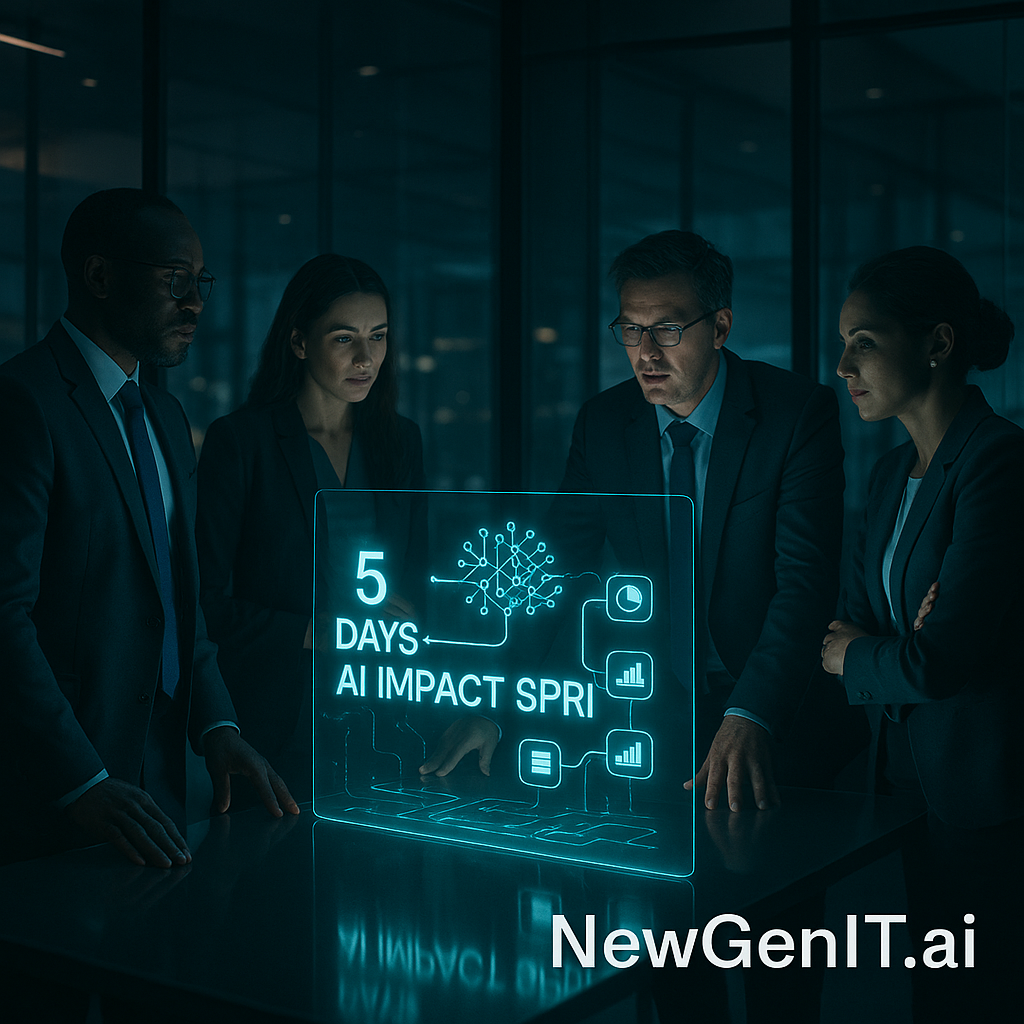
In the rapidly evolving digital landscape, South African enterprises, especially those navigating challenges like ongoing load-shedding, stringent POPIA compliance, and economic pressures, face immense pressure to harness the power of artificial intelligence (AI). CIOs, IT Directors, and business decision-makers must move beyond theory to actionable AI solutions that bring measurable value quickly. The NewGenIT AI Impact Sprint offers an innovative five-day, fast-track program turning real business data into fully operational AI systems ready for production deployment.
Addressing the South African AI Adoption Gap
While AI represents a tremendous opportunity for business transformation, the adoption curve in South Africa is often slowed by traditional project delivery models. Extended timelines, pilot projects that never deliver tangible ROI, and the risk of non-aligned outcomes contribute to skepticism among senior decision-makers. This conservatism is understandable given the local context: South African companies operate under uniquely volatile conditions including frequent power outages, commonly known as load-shedding, which disrupt operations and increase infrastructure costs. Implementing AI projects that drag on for months, costing upwards of R500,000 without clear deliverables, is a tough sell.
The AI Impact Sprint was designed specifically to challenge this paradigm, offering a time-constrained, results-driven approach. By compressing AI development into a single working week, the sprint aligns with business imperatives around cost control, risk mitigation, and compliance with data protection laws like POPIA, which govern how personal information must be handled.
How the 5-Day AI Impact Sprint Works
The AI Impact Sprint is not a proof-of-concept exercise but a fully integrated deployment model focused on delivering executable AI that directly supports your business workflows. Here’s how it unfolds:
- Day 1: Problem Framing & Data Alignment , Engage with cross-functional South African stakeholders to identify high-value AI use cases aligned with strategic priorities. Assess your authentic business data sets, whether originating from a Johannesburg retail chain, a Durban logistics firm, or a Cape Town financial service provider.
- Day 2: Data Preparation & Compliance Check , Rapid data cleaning, enhancement, and transformation processes occur. Crucially, this step includes rigorous POPIA compliance verification ensuring that sensitive South African data is secure and ethically handled.
- Days 3-4: AI Model Development & Integration , NewGenIT’s expert AI engineers rapidly prototype and validate AI models tuned to your unique operational needs, leveraging agile methods adapted for quick feedback and iteration.
- Day 5: Testing, Deployment & Handover , The AI solution is fully integrated into your existing IT infrastructure, ready for deployment with training and documentation delivered on-site or virtually, ensuring immediate usability.
Why Speed Matters to South African IT Leaders
In South Africa’s current economic context, where exchange rate fluctuations impact IT budgets and unpredictable infrastructure challenges like power interruptions increase operational risk, time-efficient AI implementations are crucial.
For example, a Johannesburg-based insurance company piloted the AI Impact Sprint for claims fraud detection. Instead of a typical 6-12 month AI project costing nearly R2 million, the company deployed a production-ready AI fraud model within 5 days, reducing claims processing time by 30% and cutting operational losses by an estimated R1.2 million annually. This rapid turnaround not only delivered tangible financial benefits but also minimized disruption during Eskom’s load-shedding schedules.
Ensuring Measurable Business Value and ROI
Every stage of the AI Impact Sprint is geared toward measurable impact. South African enterprises can expect:
- Accelerated ROI: By eliminating drawn-out pilot phases and prototype stagnation, organisations see a faster route to cost savings and revenue uplift.
- Reduced Risk: The sprint’s focused, agile approach lowers the risk profile of AI projects by emphasizing realistic goals and rapid feedback loops.
- Enhanced User Adoption: Delivering AI systems tightly integrated with existing business processes ensures higher acceptance among users, crucial in diverse, multilingual South African workplaces.
Lessons from Cape Town, Durban, and Sandton
South Africa’s distinct metro hubs provide fertile ground for AI Impact Sprint success stories. Financial institutions in Sandton have leveraged the sprint to develop AI-driven credit scoring models capable of operation despite periodic power outages, ensuring uninterrupted decision-making. In Cape Town’s burgeoning renewable energy sector, AI sprints help optimise wind and solar asset management amidst unpredictable electricity grid pressures. In Durban’s logistics and maritime industries, AI Impact Sprints enable real-time route optimization that accounts for fluctuating port traffic and load-shedding events.
Practical Takeaways for South African Business Leaders
- Prioritize Data Governance: Ensure your data is both high-quality and compliant within the POPIA framework, this is foundational to any AI success.
- Identify High-Impact Use Cases: Focus on problems that translate directly to cost savings or revenue gains in your local market context.
- Leverage Agile and Time-Boxed Delivery: Adopt methodologies like the AI Impact Sprint that deliver fast feedback and allow pivoting, crucial in volatile economic and infrastructural environments.
- Manage Change Proactively: Engage stakeholders early, including end users, to foster buy-in and minimize disruption during AI integration.
Engage with Us: How Are You Accelerating AI in Your Organisation?
At NewGenIT.ai, we understand the complexities facing South African businesses striving to harness AI’s transformative potential. The AI Impact Sprint is a proven approach designed to overcome local operational challenges, expedite value delivery, and integrate AI seamlessly into existing workflows.
We invite CIOs, IT leaders, and business decision-makers to reflect: What strategies have you found effective in translating AI vision into production outcomes? Have you experimented with rapid deployment models or faced obstacles related to infrastructure and governance? Share your insights and questions below as we explore the future of AI adoption in South Africa together.