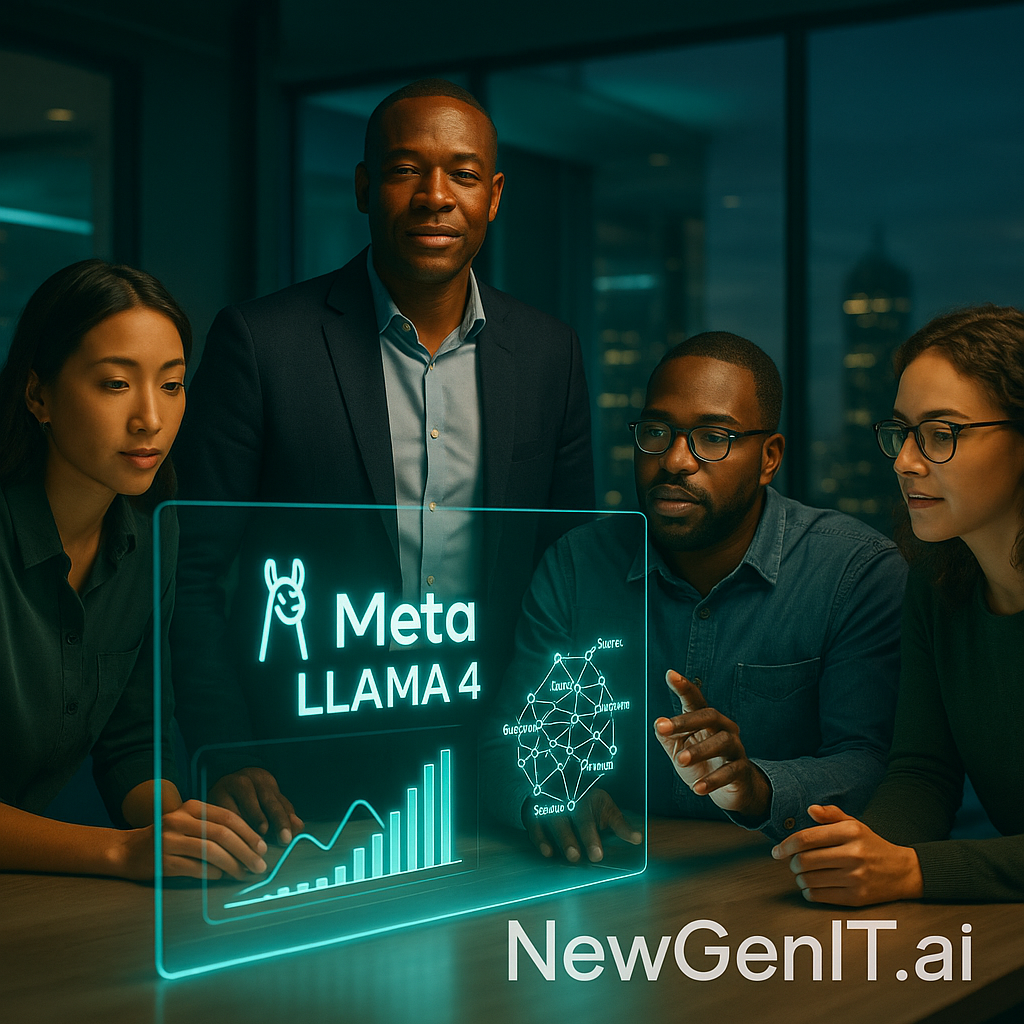
South Africa’s technology landscape is evolving rapidly, and with it comes a critical consideration for CTOs, AI engineers, and business decision-makers: should AI capabilities be built in-house or purchased from external providers? This long-standing build-vs-buy dilemma has gained fresh relevance with the recent release of Meta’s Llama 4, an advanced open-source large language model (LLM) that is reshaping how organisations approach AI strategy.
Understanding Meta Llama 4’s Breakthrough for South African Enterprises
Meta Llama 4 stands apart in the crowded LLM market due to its impressive performance metrics, rivaling leading proprietary AI models, combined with complete transparency through its open-source licensing. For South African companies, from fintech hubs in Sandton to innovation centers in Cape Town and Durban, this is a game changer. It presents an opportunity to bring sophisticated AI capabilities into internal teams without the traditional barriers of high license fees and restrictive contracts.
South African businesses typically face a series of challenges when acquiring AI solutions from global vendors, including fluctuating rand exchange rates, compliance with the Protection of Personal Information Act (POPIA), and the need for localisation to reflect local languages and cultural nuances. Llama 4’s flexibility allows in-house teams to customise models specifically for isiZulu, Afrikaans, or other indigenous languages, a critical advantage in a multilingual market.
The Build-vs-Buy Dilemma Reinforced by Local Market Realities
In South Africa’s current economic environment, marked by persistent load-shedding and cautious IT budgets, the decision to build or buy AI solutions must be weighed carefully. Buying proprietary AI solutions often involves substantial upfront and recurring costs, fluctuating heavily with rand volatility. For example, licensing fees for global AI platforms can range from tens of thousands to millions of rand annually based on usage, which many local SMEs and mid-sized enterprises find prohibitive.
Conversely, developing AI capabilities in-house demands skilled talent and infrastructure investments, often in sectors with a tight labour market and wage inflation around 7-9% annually for AI specialists. However, the open-source accessibility of Llama 4 helps lower the barrier to entry: companies can leverage existing cloud infrastructure or local data centres optimized for power efficiency to mitigate load-shedding risks and avoid ongoing licensing costs.
Key Advantages of Llama 4 for South African AI Teams
- Cost Efficiency: Eliminating proprietary licensing fees allows even small teams to experiment with large-scale language models. Running Llama 4 on open infrastructure reduces ongoing expenses by 40-60%, compared to traditional commercial AI platforms.
- Customisation & Localisation: Access to source code means teams can fine-tune models to better reflect South Africa’s diverse linguistic landscape, including isiXhosa, Sesotho, and English dialects.
- Data Sovereignty Compliance: With POPIA regulations requiring strict control over personal data, Llama 4 lets businesses process sensitive information internally without exposing data to third-party cloud vendors.
- Agility & Innovation: Open source licenses allow rapid iteration. South African start-ups and scale-ups can prototype AI-driven products faster than licensing cycles would permit, supporting dynamic, agile development cycles.
Illustrative Financial Impact of Using Llama 4 In-House
Consider a South African mid-sized e-commerce company deploying AI-powered customer support chatbots. Using proprietary AI platforms could cost upward of R1.2 million annually when factoring in volume-based API call fees and currency risks. By hosting Llama 4 locally or in a South African edge cloud provider, it’s possible to reduce costs to approximately R480,000 by cutting out API fees and optimising infrastructure for load-shedding resilience.
Over a three-year period, these savings can be redirected into the upskilling of internal AI teams or expanding the model’s role into fraud detection and demand forecasting, all tailored to local consumer behaviour.
Prospects for a Hybrid AI Model Leveraging Both Build and Buy
Experts increasingly recommend a hybrid approach, blending open-source models like Llama 4 with selective use of proprietary solutions. South African banks and insurance firms in Johannesburg, for example, are combining internally fine-tuned Llama 4 models for regulatory-sensitive tasks, while outsourcing complex NLP services that require massive scale.
This approach allows organisations to control core AI competencies while maintaining flexibility and cost management. It also aligns well with POPIA’s data protection requirements, especially when sensitive or personal data needs to reside within local jurisdiction and infrastructure.
Practical Steps for South African Businesses to Adopt Llama 4
- Assess Infrastructure Compatibility: Evaluate existing data centres, cloud providers, or edge computing options in Cape Town or Durban to ensure reliable uptime against load-shedding schedules.
- Identify Localisation Priorities: Determine which language models or data sets require enhancement to better serve your target market.
- Invest in Talent Development: Upskill AI engineers on open-source frameworks to accelerate the design and deployment of customised AI models.
- Ensure POPIA Compliance: Implement strict internal data governance policies when transitioning AI workloads in-house.
- Pilot Hybrid AI Deployments: Test combinations of open-source and commercial AI solutions to balance risk and reward.
Conclusion: Re-evaluating AI Strategy with Llama 4 in South Africa
The release of Meta Llama 4 presents South African organisations with an unprecedented opportunity to shift the AI paradigm. Reducing overreliance on costly vendor licences while empowering local teams to tailor and innovate AI solutions directly impacts ROI, agility, and compliance.
While build vs buy has historically been a trade-off of cost against expertise, Llama 4 and open-source models blur that line, encouraging a more nuanced, hybrid strategy that maximises South Africa’s unique market realities, load-shedding challenges, POPIA compliance needs, local language support, and budget constraints.
How is your organisation re-evaluating its AI strategy in light of new open-source models like Llama 4? Are you shifting more AI workloads in-house or looking at hybrid approaches? Share your experience and thoughts, we’d love to start a conversation.