
In South Africa's dynamic and often challenging IT landscape, measuring the return on investment (ROI) for artificial intelligence (AI) initiatives has never been more critical. With complexities such as frequent load-shedding, stringent data privacy regulations like POPIA, and a competitive market in hubs like Sandton, Durban, and Cape Town, IT leaders and decision-makers need a robust framework to evaluate AI projects beyond simple cost-cutting notions.
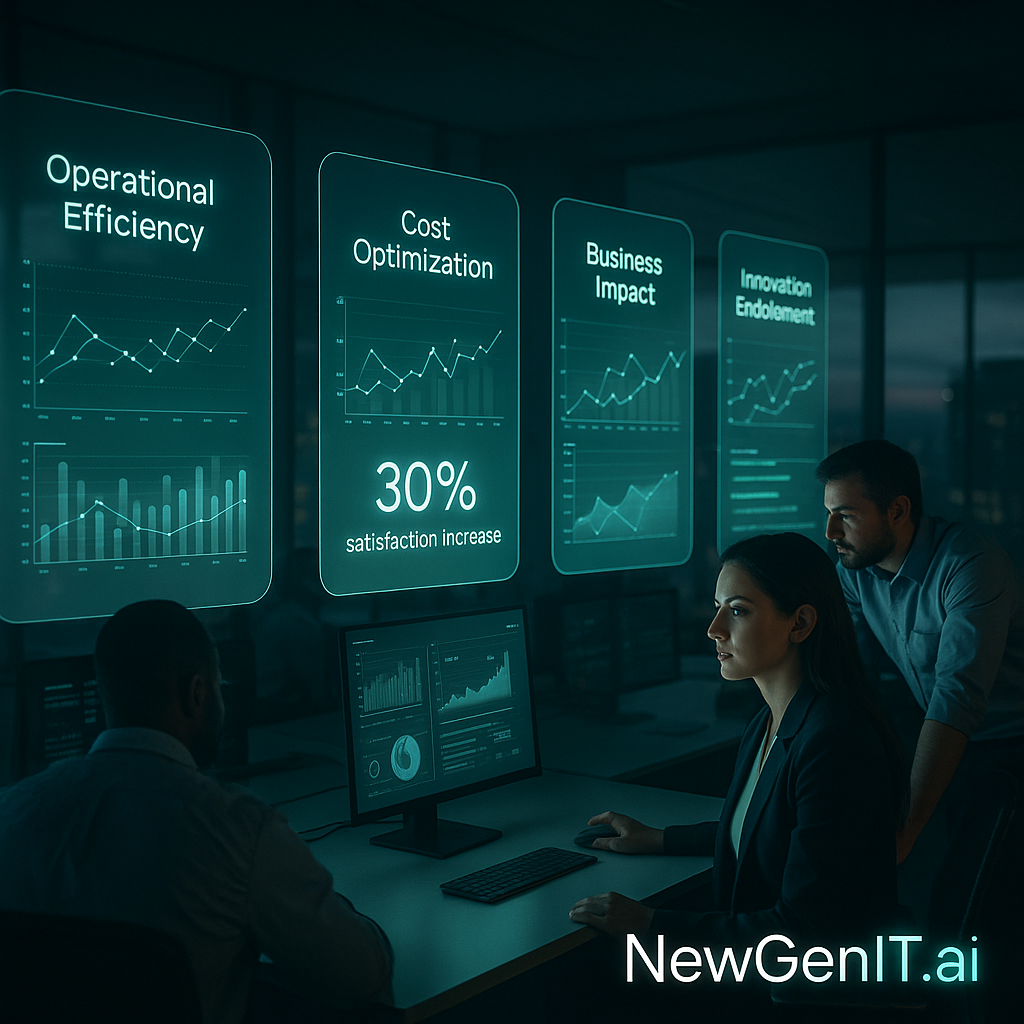
At NewGenIT.ai, we advocate for tracking AI ROI across four essential categories from day one: operational efficiency, cost optimization, business impact, and innovation enablement. This holistic assessment equips South African organisations to capture the full spectrum of AI’s value, ensuring sound investments and positioning local enterprises for sustained growth in a digitally transformative age.
Understanding the South African IT Environment
Before exploring the four key categories, it's crucial to understand the unique South African context in which AI initiatives are deployed. Load-shedding remains a significant operational hurdle for enterprises, causing unpredictable power outages that disrupt IT systems. Ensuring resilient IT infrastructure and continuous service delivery demands intelligent automation and proactive issue resolution that AI solutions promise.
Moreover, South African businesses must comply with the Protection of Personal Information Act (POPIA), which requires strict data governance protocols when implementing AI-driven analytics and automation. Failure to comply can result in severe fines and damage to reputation, an added layer of risk when justifying AI investments.
In addition, the volatile rand exchange rate affects capital expenditure, encouraging CIOs and CFOs to scrutinize every rand spent on new technologies. Thus, understanding AI ROI is not only a technical concern but also a financial imperative within local market constraints.
1. Operational Efficiency: Streamlining IT Workflows under Challenging Conditions
Operational efficiency refers to how effectively AI technologies improve internal IT processes. In South Africa, where IT operations often battle infrastructure inconsistencies, AI’s ability to reduce human error, automate repetitive tasks, and accelerate incident resolution is invaluable.
For example, consider a medium-sized financial services firm in Cape Town facing frequent service desk ticket backlogs during load-shedding periods. Implementing AI-powered predictive analytics enabled their support teams to anticipate outages, automatically reroute service requests, and reduce average resolution times by 40%. This translated to faster recovery, enhanced employee productivity, and a more resilient user experience.
Practical takeaway: Measure metrics like mean time to resolution (MTTR), ticket volume reduction, and workflow automation rates to quantify operational improvements. Start tracking these KPIs from project inception to establish clear baselines and monitor incremental gains.
2. Cost Optimization: Beyond Cutting Expenses to Avoiding Costs
Cost optimization encompasses direct savings and cost avoidance strategies facilitated by AI. South African businesses are particularly sensitive to facility and energy costs, amplified by load-shedding and cooling requirements for data centers. AI enables smarter resource allocation and predictive maintenance that can prevent costly downtime.
For instance, a telecom operator in Durban deploying AI-based asset monitoring reduced unscheduled hardware failures by 25%, saving approximately ZAR 1.5 million annually in repair and operational costs. Additionally, AI-driven workload balancing improved energy efficiency, lowering electricity expenses during peak demand.
Importantly, cost optimization also involves reallocating staff from mundane tasks to higher-value roles, increasing overall productivity. This strategic redeployment can yield compound financial benefits beyond immediate savings.
Practical takeaway: Incorporate cost avoidance metrics alongside traditional expense reduction figures. Use AI analytics to estimate avoided losses from downtime or regulatory non-compliance as part of ROI calculations.
3. Business Impact: Enhancing User Experience and Strategic Alignment
Beyond operational and financial metrics, AI's contribution to broader business objectives is often overlooked. Measuring business impact involves quantifying improvements in end-user experience, service reliability, and how AI-driven insights support strategic decision-making.
Take an e-commerce company based in Sandton leveraging AI-powered customer service bots that handle 70% of client inquiries autonomously. This not only improved response times by 60% but also increased customer satisfaction scores, resulting in a 15% uplift in repeat sales. Furthermore, AI analytics helped executives identify emerging trends, enabling agile marketing campaigns aligned with evolving consumer behaviors.
For South African companies, maintaining high service standards in a competitive market is essential. AI that detects and corrects issues before they impact customers provides a tangible advantage.
Practical takeaway: Measure customer satisfaction (CSAT), Net Promoter Score (NPS), and revenue growth linked to AI-driven service improvements. Track how AI insights influence strategic initiatives or risk mitigation.
4. Innovation Enablement: Unlocking Competitive Advantages through AI
Lastly, innovation enablement captures how AI fosters new capabilities and accelerates experimentation. South African enterprises embracing AI to create novel products or enhance existing offerings gain a decisive edge in both local and global markets.
For example, a Cape Town-based logistics firm integrated AI-powered route optimization that reduced delivery times by 20% while lowering fuel consumption. This innovation supported their market expansion plans and attracted new customers seeking reliable, eco-friendly service. The firm also adopted rapid iterative testing of AI models, enabling faster product refinements and responsiveness to shifting demands.
This forward-looking dimension of AI ROI is often intangible but vital for long-term competitiveness.
Practical takeaway: Track AI-driven project pipeline velocity, time-to-market reductions, and new revenue streams generated. Encourage a culture of AI experimentation and document lessons learned to quantify innovation benefits.
Implementing a Holistic AI ROI Tracking Framework
To successfully capture these four ROI categories, South African IT leaders should deploy integrated dashboards combining data from AI systems, financial records, and customer feedback platforms. Regularly review these metrics with cross-functional teams to ensure alignment and predict challenges.
Investing early in defining clear KPIs for operational efficiency, cost metrics, business impact, and innovation ensures stakeholders can objectively evaluate AI initiatives. Also, embed continuous improvement loops to adapt strategies as new insights emerge from AI deployments.
Final Thoughts: Maximising AI Value in South Africa’s Unique Market
For South African companies navigating the dual pressures of a constrained power grid and evolving regulatory environment, measuring AI ROI comprehensively is not merely a best practice but a necessity. Operational efficiencies help counteract load-shedding effects, while cost optimization protects precious rand investments. Business impact measurements ensure AI supports competitiveness, and fostering innovation prepares enterprises for the future digital economy.
NewGenIT.ai’s approach provides a pragmatic, end-to-end framework that IT leaders across sectors, including finance, telecommunications, retail, and logistics, can adopt from day one. This ensures AI projects deliver tangible returns and build a foundation for sustained success amid South Africa’s distinct realities.
Discussion
How is your organisation measuring AI ROI in the face of South Africa’s infrastructure and regulatory challenges? Are you capturing all four categories effectively or focusing too narrowly on one? Share your perspectives or challenges in implementing comprehensive AI evaluation frameworks below.