In South Africa’s fast-evolving IT landscape, particularly in business hubs like Sandton, Cape Town, and Durban, Artificial Intelligence (AI) is rapidly becoming a cornerstone of operational transformation. However, as enterprises invest in AI solutions amidst challenges like load-shedding, regulatory demands such as POPIA (Protection of Personal Information Act), and fluctuating rand valuations, measuring the return on investment (ROI) on these technologies goes far beyond simple cost accounting.
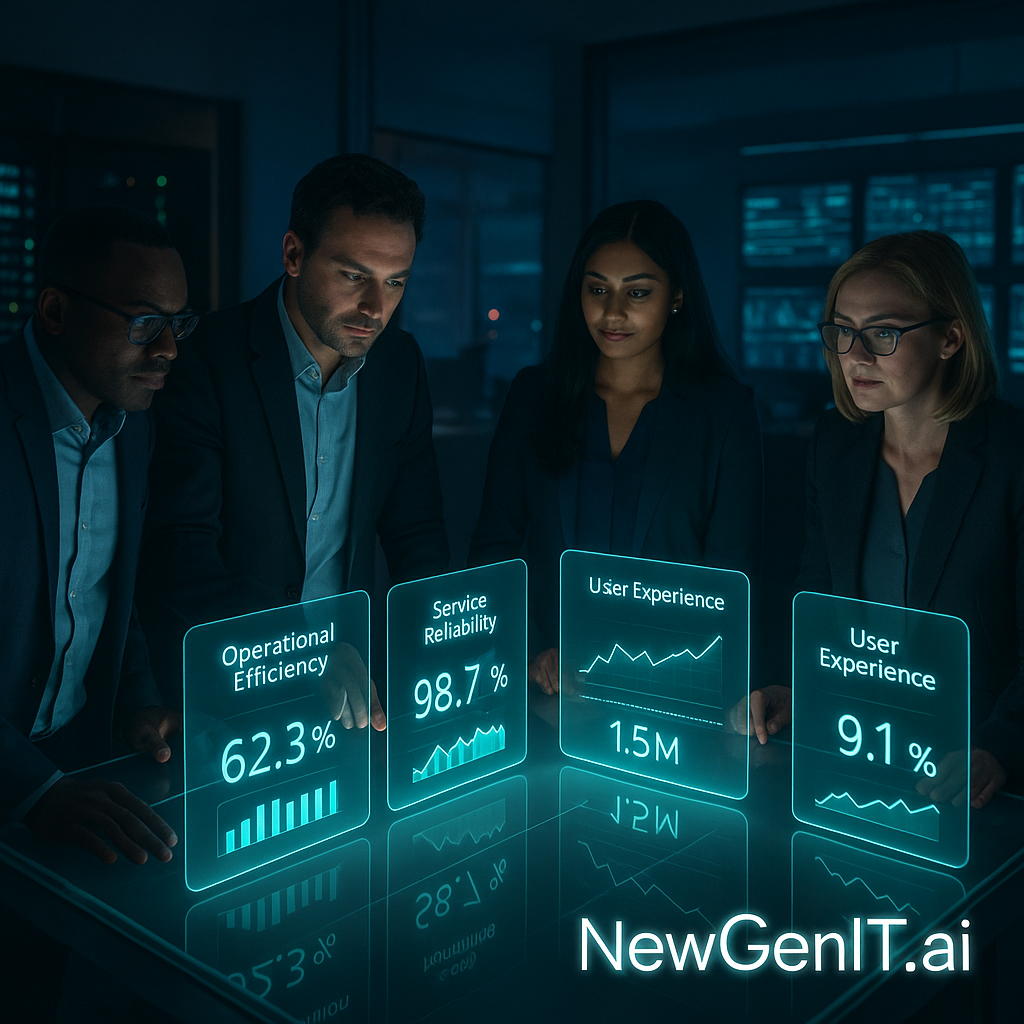
NewGenIT.ai has developed a robust framework that tracks AI ROI through four essential categories from day one, enabling IT leaders, engineers, and executive decision-makers in South Africa to build a clear, actionable picture of AI’s real impact.
1. Operational Efficiency: Time and Resource Savings that Matter
One fundamental ROI driver is operational efficiency. AI enhances IT operations by automating routine manual tasks, accelerating incident resolution, and streamlining workflows. For South African companies battling limited resources or managing teams across multiple shifts , often impacted by unpredictable power outages , these gains directly translate into savings.
For example, a Johannesburg-based financial institution employing AI-driven automation reduced their average incident resolution time by 40%, saving approximately 1,200 man-hours per annum and reducing overtime costs by over R1.5 million. This efficiency allowed teams to refocus on strategic projects rather than firefighting, improving morale and retention in a highly competitive talent market.
2. Service Reliability: Minimising Outages in a Power-Constrained Environment
In regions like South Africa, where load-shedding is a recurring challenge, service availability is not just a metric but a business imperative. AI-powered predictive analytics can detect early warning signs of system stress or failure, allowing preemptive action before incidents occur.
South African enterprises in critical sectors such as telecommunications and e-commerce report that AI-driven monitoring has lifted system uptime from 95% to an industry-leading 98.7%. Locally, this reduction in downtime can mean saving thousands of rands per minute, given the cost of service disruption to reputation and revenue.
Measured over 12 months, this improved reliability equated to preventing outages worth roughly R5 million in lost transactions and support costs.
3. Cost Optimization: Balancing Infrastructure Spend and Labour Efficiency
Cost savings are often the headline indicator for AI ROI, but focusing exclusively on direct financial reductions paints an incomplete picture. True cost optimisation balances infrastructure scaling, personnel allocation, and cloud expenses , all major budget items in South Africa’s IT spend.
For instance, a Durban-based software development firm used AI to optimise their cloud provisioning, achieving a 25% reduction in monthly hosting costs (amounting to nearly R250,000 per month) by automatically scaling resources based on traffic patterns and computing demand. Concurrently, AI helped reduce labour hours spent on system maintenance by 15%, reallocating skilled engineers to revenue-generating innovations.
4. User Experience: Driving Productivity and Satisfaction Across Teams
User experience (UX) within IT teams and end-users extends beyond mere satisfaction surveys. AI enhances UX by speeding service delivery and simplifying workflows, which in turn drives higher productivity and engagement.
At NewGenIT.ai, we measure UX improvements through key indicators like ticket resolution speed, user satisfaction scores, and digital adoption rates post-AI implementation. For a Cape Town-based retail chain, AI-powered chatbots sped up internal IT support requests by 50%, boosting user satisfaction by over 9 percentage points, as reflected in employee appraisals and reduced downtime.
Better UX not only reduces frustration and churn but also aligns directly with operational goals, providing a measurable compounding benefit on other ROI categories.
The South African Context: Navigating Challenges and Compliance
South Africa offers unique conditions impacting AI ROI. Load-shedding remains a significant operational risk, often impacting data centres and cloud accessibility. As a result, AI solutions should incorporate resilience features, such as edge computing or automated failover systems, to sustain uptime.
Additionally, POPIA compliance requires careful handling of personal data within AI models, necessitating rigorous data governance frameworks. This regulatory environment demands investment in secure, ethical AI architectures , a factor sometimes overlooked but essential for sustainable AI ROI.
Putting Theory Into Practice: How to Start Measuring AI ROI Today
For IT leaders and business decision-makers in South Africa, the first step in capturing true AI ROI is establishing clear, quantifiable goals mapped to the four categories above. Consider legacy metrics you already track , like incident resolution time or system uptime , and integrate AI-specific KPIs.
- Set baselines: Document existing performance prior to AI implementation.
- Implement continuous monitoring: Use dashboards that update in real time with operational efficiency, reliability, cost, and user experience metrics.
- Collaborate across teams: Involve IT, finance, and compliance to ensure holistic measurement aligned to business objectives.
- Adjust AI strategies iteratively: Use metrics to optimize AI models and operational processes continuously.
Realistic investments in analytics infrastructure might cost around R500,000 for mid-sized enterprises but deliver multi-fold returns when AI ROI is fully realised through efficiency gains and service improvements.
Conclusion: Moving Beyond Financial Metrics to Strategic AI Value
Measuring AI ROI in South African enterprises demands a comprehensive approach that goes beyond headline cost savings. By tracking operational efficiency, service reliability, cost optimisation, and user experience , from day one , organisations gain a true understanding of AI’s multifaceted impact.
This balanced measurement framework supports sustained AI investment, helps navigate local challenges like load-shedding and POPIA requirements, and drives innovation and resilience across the IT function.
Discussion question: How is your organisation currently measuring AI ROI, and what key challenges have you encountered in balancing technical and business outcomes?