In South Africa's fast-evolving digital landscape, where organisations are under pressure to optimise resources amid challenges like load-shedding and strict data protection laws such as POPIA, IT leaders face mounting pressure to justify AI investments with clear return on investment (ROI). Yet, many initiatives falter due to an overly narrow focus on immediate financial gains rather than a holistic understanding of AI's multifaceted business impact.
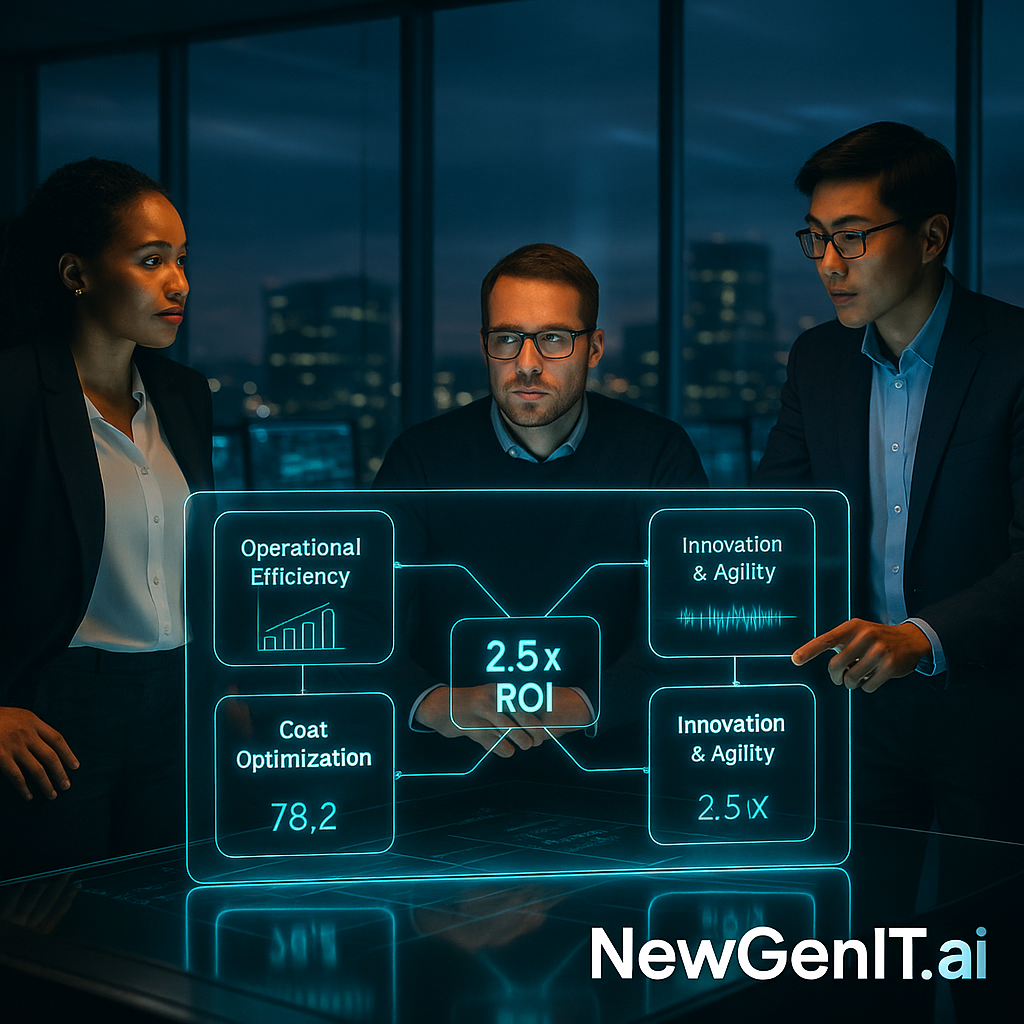
At NewGenIT, we've observed that successfully embedding AI into IT operations demands a comprehensive approach to measuring ROI from day one. Our experience shows that tracking four key categories, Operational Efficiency Gains, Cost Optimisation, User and Customer Experience Enhancements, and Innovation and Agility Enablement, enables IT departments to build robust ROI models that reflect real business value and foster sustained AI adoption.
1. Operational Efficiency Gains in South African IT Environments
Operational efficiency is often the first and most tangible benefit IT teams seek when deploying AI solutions. This involves quantifying time saved, reductions in manual workload, and improvements in incident response times. In South Africa, where many enterprises operate with lean IT teams affected by frequent load-shedding outages, utilising AI to automate routine tasks such as monitoring, fault detection, and basic user query handling can significantly free up human resources.
For example, a typical Johannesburg-based financial services firm with 10 IT staff can reduce manual ticket handling by up to 30%, translating into around 15 hours saved per week. Given the average IT salary in Gauteng ranges between R25,000 and R40,000 monthly, these efficiency gains equate to freeing labor equivalent to roughly R10,000 monthly, without upfront cost increases.
Moreover, automating incident resolution workflows reduces mean time to resolution (MTTR), a critical metric in maintaining uptime amid South Africa's energy supply variability. AI-driven predictive analytics can proactively alert teams of potential failures before they escalate, helping avoid costly outages or service disruptions.
2. Cost Optimisation: Cutting Cloud and Licensing Spend in Rand
Cost optimisation extends beyond direct labour savings and is a substantial factor in AI ROI measurement, particularly important in the South African market where budget constraints and currency volatility influence IT spending decisions.
Cloud expenditure is a growing portion of IT budgets, with many organisations shifting to hybrid or cloud-native architectures. AI-powered analytics can identify underutilised resources, optimise workload placement, and enforce governance policies effectively, reducing wastage. For instance, an e-commerce company in Cape Town leveraging AI to optimise AWS resource use reported a 20-25% reduction in cloud bills within six months, saving approximately R150,000, that's a meaningful sum for companies operating on tight margins.
Similarly, AI tools enable smarter license management by monitoring software usage patterns, helping compliance teams avoid unnecessary renewals or over-provisioning, critical in South Africa given the reputational and legal risks of POPIA non-compliance that comes with improper data handling or software misuse.
3. User and Customer Experience Enhancements in the South African Context
As digital transformation accelerates, end-user experience, including employee productivity and customer satisfaction, has become an essential ROI dimension. AI-enabled IT operations can improve service delivery through faster incident triaging, real-time support, and personalised interactions.
South African companies in metropolitan hubs like Sandton or Durban face strong competition requiring high responsiveness and user reliability. AI chatbots, for example, enable 24/7 IT support for internal users, reducing wait times from hours to minutes and raising employee satisfaction scores. Using sentiment analysis and ticket trend identification, AI also helps IT teams prioritise systemic issues impacting large user groups.
This focus on user centricity translates into measurable business value. For example, a Cape Town-based logistics company reported a 15% increase in first-contact resolution rates after deploying AI-enhanced ITSM tools, alongside a 12% uplift in employee engagement metrics.
4. Innovation and Agility Enablement for South African IT Teams
True AI ROI extends beyond immediate cost or efficiency metrics to encompass the ability to innovate faster and operate with agility in a rapidly changing market. South Africa’s dynamic economic environment, with its regulatory complexities and infrastructure constraints, demands IT teams that can anticipate changes and proactively adapt.
AI accelerates innovation cycles by enabling data-driven decision-making, risk prediction, and rapid scenario simulations. For instance, banks in Johannesburg are deploying AI to predict transactional anomalies, preventing fraud, and ensuring compliance before violations occur. This capability not only reduces losses but also enhances regulatory preparedness in a POPIA-compliant manner.
Furthermore, AI-driven analytics enable IT teams to forecast system load impacts during peak business periods or anticipated outages induced by load shedding, allowing advanced resource reallocations and minimising downtime risks, strengthening overall business agility.
Building an Integrated AI ROI Measurement Framework
South African IT decision-makers need comprehensive, actionable metrics that capture the full spectrum of AI impact, from operational improvements through to strategic agility. Building this framework involves:
- Setting clear, measurable objectives aligned with local business realities such as load-shedding, budget caps, and compliance needs.
- Collecting data systematically from AI deployments across different business units and IT functions.
- Regularly analysing and reporting on the four categories, tracking KPIs that matter to stakeholders from Sandton boardrooms to Cape Town IT floors.
- Adjusting investments based on evolving insights to maximise ROI and sustain momentum.
By adopting this integrated approach, organisations stand to improve their AI adoption success, evidenced by Gartner’s findings that leaders taking a holistic ROI view are 2.5 times more likely to generate lasting business value.
Practical Takeaways for South African IT Leaders
- Measure time saved, not just money saved: Factor in workforce productivity improvements especially critical amid staff shortages and energy interruptions.
- Include compliance risk reduction: Quantify how AI helps avoid penalties under POPIA and other local regulations.
- Use localised performance benchmarks: Calibrate AI impact against South African industry averages to present relevant business cases.
- Leverage government incentives: Investigate tech or innovation grants that can offset AI investment costs.
- Keep user experience front and centre: Recognise that happier users contribute indirectly to revenue through higher retention and efficiency.
Conclusion and Invitation to Discuss
Measuring the ROI of AI in South Africa requires more than just tallying immediate cost savings. It demands a comprehensive view, one that embraces operational efficiency, cost optimisation, user experience, and innovation as interconnected levers driving business value. IT leaders and engineers who embed this mindset from the outset position their organisations to thrive despite unique challenges like load-shedding and regulatory demands.
How is your organisation currently measuring AI ROI, and which of these categories do you find most challenging to quantify? We invite you to share your experiences and strategies in the comments below.