In the rapidly evolving technological landscape of South Africa, artificial intelligence (AI) has transitioned from an experimental technology to a strategic imperative. For IT leaders, engineers, and business decision-makers, particularly those navigating complex environments such as Sandton, Cape Town, and Durban, understanding how to measure AI return on investment (ROI) accurately is essential.
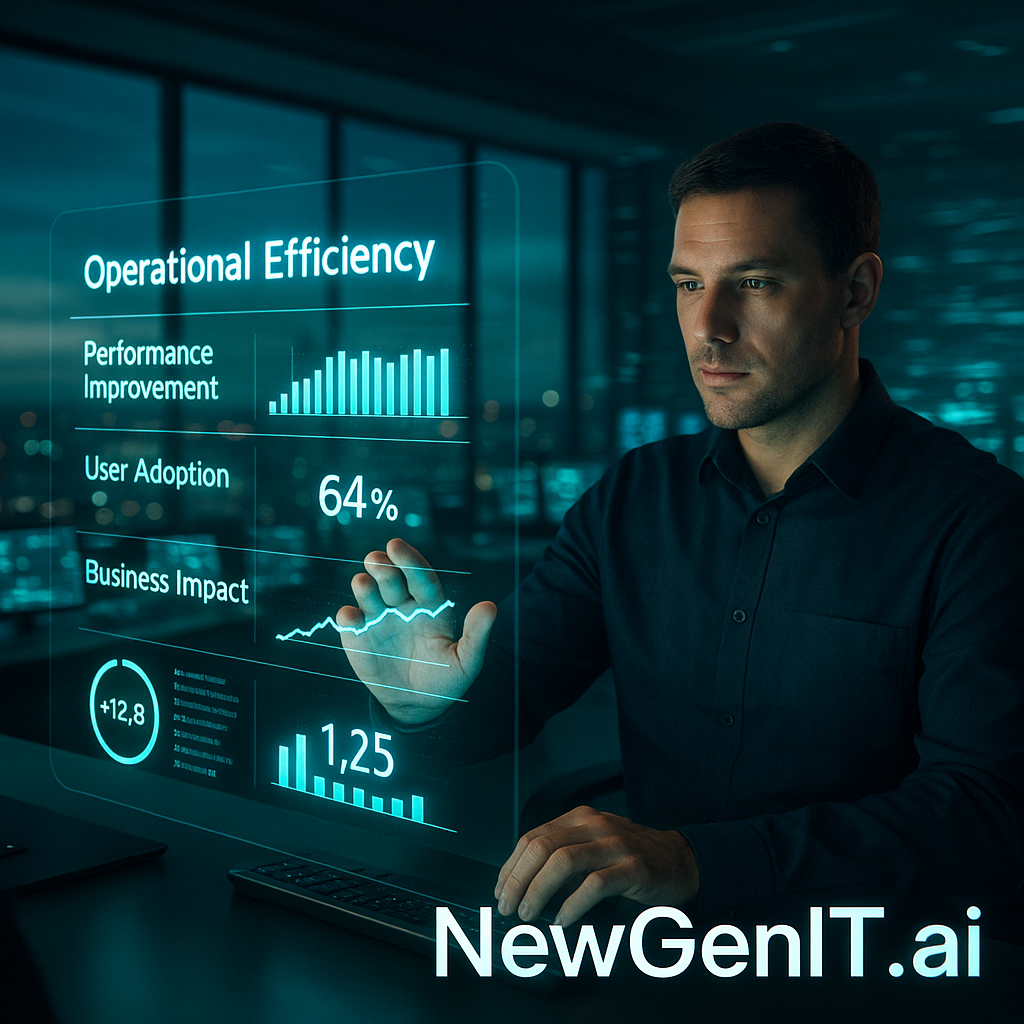
At NewGenIT.ai, we emphasize a disciplined approach to tracking AI ROI by focusing on four critical categories from day one: operational efficiency, performance improvement, user adoption and experience, and business impact. This framework is designed to deliver not only numbers but tangible, actionable insights that South African enterprises can leverage amid unique local challenges, from load shedding to compliance with the Protection of Personal Information Act (POPIA).
Operational Efficiency: Cutting Costs and Time in a Load-Shedding Context
Operational efficiency is often the most immediate quantifiable benefit of AI implementation. In South Africa, where load shedding frequently disrupts daily business operations, AI-driven automation and optimisation can significantly reduce manual intervention and downtime. For instance, AI systems that predict and automatically reallocate workloads during power outages help maintain business continuity, saving thousands of rands in lost productivity.
Consider a mid-sized financial services firm in Johannesburg’s Sandton district implementing an AI-powered automated incident response system. By reducing the average manual resolution time of IT tickets from 3 hours to 1 hour, the company could save approximately ZAR 250,000 annually in operational labour costs alone, assuming an average technician hourly rate of ZAR 350 and 2000 incidents per year.
Beyond cost, AI also helps maximise resource utilisation. Predictive scheduling algorithms can optimise staff shifts around scheduled load shedding phases, preventing overstaffing and minimising overtime costs. Implementing such solutions from day one encourages ongoing optimisation cycles critical to navigating South Africa's energy challenges.
Performance Improvement: Enhancing Reliability in Unpredictable Environments
Performance metrics, including system reliability, latency, and throughput, directly influence business outcomes. AI's role in predictive maintenance is particularly critical in environments where infrastructure instability is common.
For example, manufacturing clients in Durban leveraging AI to monitor equipment health can forecast potential failures, avoiding unplanned downtime which can cost upwards of ZAR 500,000 per hour, considering lost production and repairs. AI models that identify anomalies ahead of failures enable preemptive interventions that maintain continuous operation.
In IT operations, AI-driven anomaly detection reduces false positives in monitoring systems by up to 60%, allowing teams to focus on genuine performance issues. Lower latency in critical applications, for example, in online banking platforms in Cape Town, translates into better customer experiences and lower abandonment rates. These performance enhancements are measurable and should be tracked rigorously from the outset.
User Adoption and Experience: Driving Engagement Among South African IT Staff
Even the most advanced AI tools fail to deliver value without adoption by users. In the South African IT context, where skills shortages and high workload pressure are prevalent, ensuring AI tools enhance the staff and end-user experience is vital.
NewGenIT.ai tracks user adoption through metrics such as active daily users, feature utilization rates, and satisfaction surveys. For example, a telecommunications operator in Cape Town found that after integrating AI chatbot support for their IT helpdesk, user adoption grew to over 70% within three months. This adoption correlated with a 25% rise in employee satisfaction scores related to IT support services.
Furthermore, AI-powered tools that reduce repetitive tasks, such as automated diagnostics and reporting, empower IT teams to focus on strategic activities rather than firefighting. Building tailored training programs aligned with local languages and technical contexts has proven essential for higher adoption in South African enterprises.
Business Impact: Aligning AI Outcomes with Strategic Goals Under POPIA
Ultimately, AI initiatives must justify their cost through direct business impact. For South African organisations, this includes revenue growth, cost avoidance, risk mitigation, and compliance adherence, especially in relation to POPIA, which imposes stringent data privacy and protection regulations.
An example includes a retail chain based in Johannesburg that deployed AI-driven demand forecasting and inventory optimisation. The result was a 10% reduction in stockouts and a 7% increase in sales, equating to an additional ZAR 5 million in annual revenue. The AI system also supported compliance by automating data access controls and audit logging, reducing regulatory risk.
Additionally, AI can drastically reduce downtime costs, which in critical sectors can reach millions of rands per hour. Accurate tracking of downtime reductions attributable to AI solutions provides clear financial justification for continued investment.
Integrating AI ROI Tracking into Existing IT Operations Frameworks
South African IT leaders should embed AI ROI metrics into existing operational dashboards and governance processes. This integration enables cohesive reporting aligned with enterprise performance management systems and board-level KPIs.
For instance, combining AI-driven operational efficiency data with load shedding schedules from Eskom allows more precise capacity planning and risk prediction. Supplementing this with user adoption insights supports targeted change management strategies, ensuring AI initiatives deliver sustainable value over time.
NewGenIT.ai recommends leveraging business intelligence platforms capable of aggregating AI metrics alongside financial and operational data for a unified view that supports agile decision-making.
Practical Takeaways for South African IT Leaders and Decision Makers
- Start Early and Define Clear Metrics: Establish KPIs for the four categories, operational efficiency, performance improvement, user adoption, and business impact, before AI deployment begins to ensure consistent tracking.
- Consider Local Challenges: Account for load shedding effects and POPIA requirements when defining AI use cases and ROI assessments.
- Leverage Quantifiable Examples: Use real local cost figures and operational data to build business cases that resonate with stakeholders.
- Foster Collaboration Between IT and Business: Ensure that AI initiatives align with overall business strategy and regulatory compliance from day one.
- Invest in Training and Change Management: Improve user adoption rates by customizing training to the South African context and addressing skill gaps.
Accurately measuring AI ROI is not a one-time task but an ongoing process that drives continuous improvement and accountability. By following these best practices, South African enterprises can maximize the benefits of AI investments, even in a challenging environment.
Discussion
How is your South African organisation currently measuring AI ROI, and what challenges have you faced in tracking these key categories? Are there specific local factors that affect your approach? We invite you to share your experiences and insights with us.