
As artificial intelligence (AI) continues to transform IT operations globally, South African enterprises face unique opportunities and challenges in harnessing AI for sustainable business value. With load-shedding disrupting continuity, data privacy regulations like POPIA imposing stringent compliance standards, and a dynamic economic landscape marked by rand volatility, it is critical that IT leaders and business decision-makers adopt a strategic, precise approach to measuring AI return on investment (ROI).
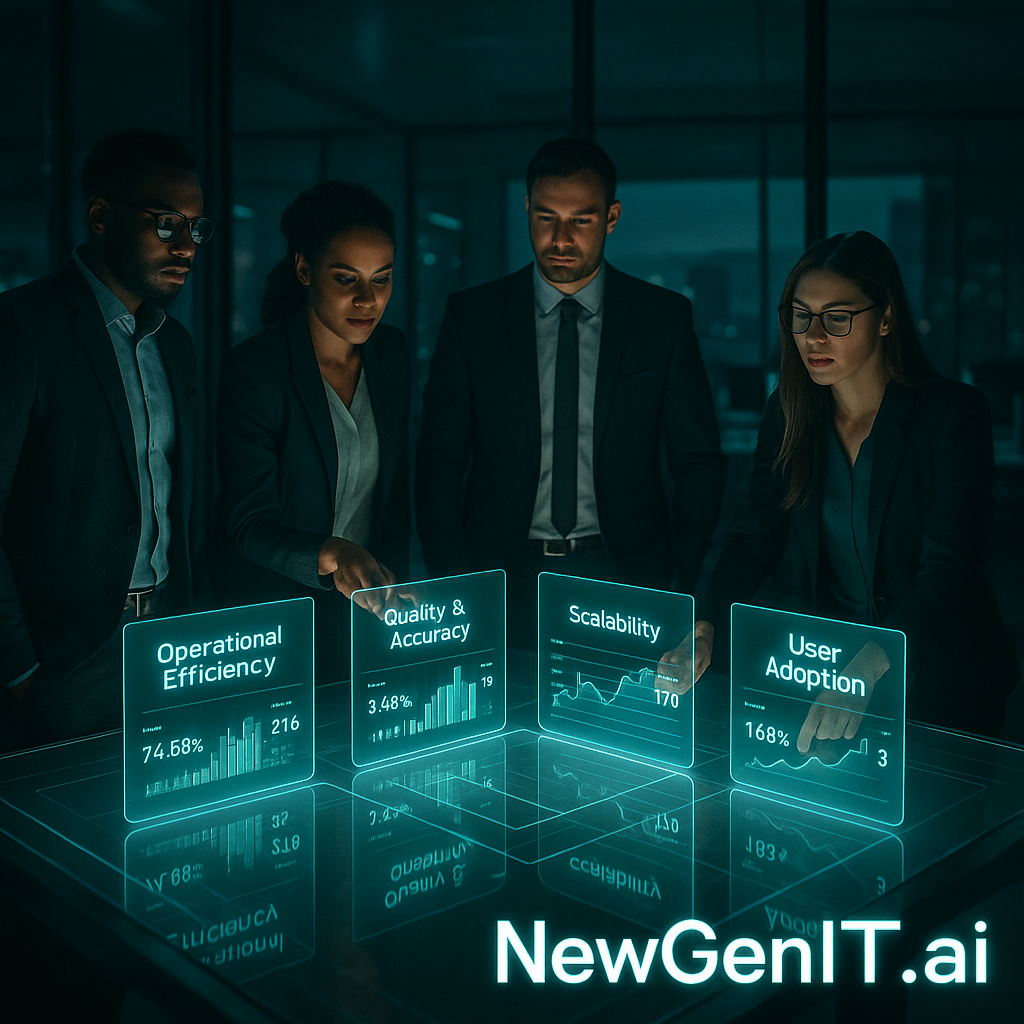
At NewGenIT.ai, we emphasize four essential categories that IT teams must track from day one when deploying AI solutions. These categories provide a robust framework that transcends superficial metrics and uncovers the real business impact of AI initiatives.
1. Operational Efficiency Gains: Cutting Costs Amidst Load-Shedding Challenges
Operational efficiency remains a top priority for South African IT operations, especially in regions like Sandton and Cape Town where businesses grapple with the economic consequences of persistent load-shedding. AI can automate routine tasks, shorten incident response times, and preempt infrastructure failures, leading to measurable cost savings.
For instance, an AI-driven predictive maintenance system can anticipate hardware failures in data centres, reducing downtime by up to 30%. In financial terms, if a medium-sized bank in Johannesburg experiences an hourly cost of R250,000 during system outages, reducing downtime by even one hour per week translates to R13 million annual savings. Tracking these operational metrics, like manual effort reduction, incident response time, and downtime, is critical to quantifying efficiency gains.
2. Quality and Accuracy Improvements: Enhancing Decision-Making and Compliance under POPIA
Quality and accuracy in AI outputs directly influence business trust and regulatory compliance, especially under South Africa’s Protection of Personal Information Act (POPIA). AI-powered anomaly detection algorithms help reduce errors in IT processes such as fraud detection, data classification, and system health monitoring.
Consider a Durban-based insurance company leveraging AI to flag fraudulent claims. Improved detection accuracy by 15% can save millions in fraud payouts annually while ensuring compliance with data privacy laws. Tracking reductions in error rates, false positives, and decision latency provides concrete evidence of AI’s enhancements to operational quality and governance.
3. Scalability and Flexibility: Adapting AI Solutions to South African Market Realities
Scalability is essential as data volumes surge and IT environments grow more complex. AI solutions must adapt to increasing loads without ballooning costs or sacrificing performance. South African organisations often contend with infrastructure constraints and connectivity issues, AI architectures must therefore be flexible to operate reliably under these conditions.
A retail chain operating in multiple cities including Cape Town and Pretoria might initially deploy AI-driven customer analytics in flagship stores. Ability to scale the same solution across 50 outlets efficiently, handling a 5x increase in data and users, shows tangible scalability. Tracking system throughput, resource consumption, and cost per transaction are key metrics to assess long-term viability and flexibility.
4. User and Stakeholder Adoption: Driving Sustainable AI Value through People
Successful AI implementation hinges as much on people as on technology. Adoption rates and user satisfaction directly correlate with sustained returns. In South Africa’s diverse workforce, cultural change management is critical to overcoming resistance and instilling confidence in AI-driven workflows.
For example, a Cape Town financial services firm found that embedding AI support bots reduced helpdesk ticket volume by 40%, but only after targeted training and communication programs improved user adoption from 50% to over 80%. Gauging customer and employee feedback, usage statistics, and support costs provides a holistic picture of AI’s footprint and identifies areas for improvement.
Integrating Quantitative and Qualitative Insights for Holistic AI ROI Measurement
Quantitative data such as downtime reduction, error rates, and cost metrics combined with qualitative feedback from users and stakeholders produces actionable insights. This blend is vital for South African IT leaders to make informed decisions, secure executive buy-in, and optimise AI deployments continuously.
For instance, a Sandton-based fintech firm regularly reviews operational dashboards alongside employee surveys to track AI impact on both system performance and workforce morale. This dual approach fosters agility and aligns AI efforts with strategic goals in an environment marked by rapid technological and regulatory change.
Practical Takeaways for South African IT and Business Leaders
- Start tracking from day one: Early data collection on operational, quality, scalability, and adoption metrics prevents costly blind spots.
- Align metrics with business goals: Define AI success in terms of local market challenges like load-shedding and POPIA compliance.
- Leverage automation to reduce manual effort: Prioritise AI that tangibly cuts time and costs in IT operations.
- Invest in change management: Encourage cultural adoption through training tailored to South Africa’s workforce diversity.
- Use hybrid insights for optimisation: Combine number-driven results with stakeholder feedback to iterate and improve AI initiatives.
By rigorously measuring these four categories, South African organisations can unlock AI’s full potential, transforming IT operations from a cost center into a strategic driver of competitive advantage.
Discussion
How is your organisation measuring AI success in the face of South Africa’s unique operational and regulatory landscape? What strategies have proven effective or challenging in quantifying and communicating AI ROI? We invite you to share your experiences and insights.