In the fast-evolving landscape of artificial intelligence (AI), deploying a solution marks only the beginning of the journey. For South African IT leaders, engineers, and business decision-makers, managing AI models post-deployment is critical to ensuring ongoing performance, mitigating risks, and achieving long-term business value. With unique challenges like frequent load-shedding, stringent data privacy regulations such as POPIA, and fluctuating market conditions in economic hubs including Sandton, Durban, and Cape Town, a proactive, managed approach to AI operations is essential.
At NewGenIT, we have developed a comprehensive Managed AI Operations framework designed to empower enterprises across South Africa to realize maximum returns from their AI investments. This article delves into the key components we focus on after AI solution deployment and illustrates their significance within the South African context.
Continuous Performance Monitoring: Staying Ahead of Model Drift and Downtime
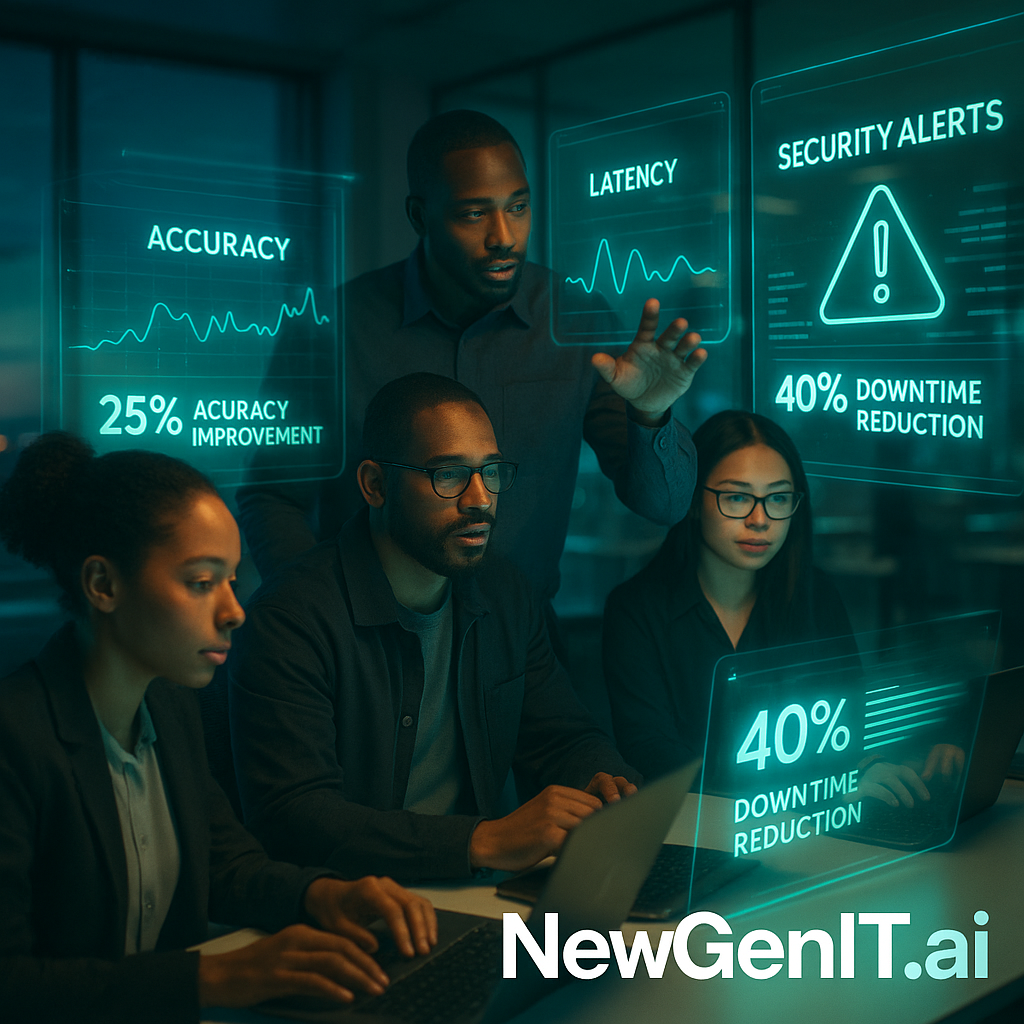
AI models are highly sensitive to data changes and environmental shifts. In South Africa, where businesses face rapidly changing market dynamics and intermittent power outages, continuous monitoring provides a crucial safety net. NewGenIT tracks core metrics such as model accuracy, latency, and resource utilization in real time. By detecting early signs of model drift or performance degradation, our teams initiate timely interventions to prevent costly downtime.
For example, a financial services firm in Sandton reported a 40% reduction in AI system downtime after partnering with NewGenIT’s monitoring services. This translated into improved customer experience and operational continuity, even during periods of network instability linked to load-shedding.
Scheduled Maintenance and Smart Updates: Adapting AI to Local Data Realities
Data patterns in South Africa can shift unpredictably due to economic fluctuations, seasonal trends, and local consumer behavior. NewGenIT implements scheduled retraining and fine-tuning regimes to recalibrate AI models against current data. Additionally, robust version control mechanisms ensure reliable rollback options if updates introduce errors.
Consider a retail chain in Cape Town that experienced a significant uplift in recommendation engine accuracy by approximately 25% following quarterly retraining aligned with promotional seasons and consumer habits. This enabled targeted marketing campaigns and inventory optimization benefiting the bottom line.
Prioritizing Data Integrity and Security: Navigating POPIA and Cyber Risks
With the Protection of Personal Information Act (POPIA) firmly in force, South African companies must exercise heightened diligence in securing data pipelines feeding AI models. At NewGenIT, vigilant oversight detects anomalies and flags potential breaches before they escalate.
We implement end-to-end encryption, access controls, and continuous auditing aligned with local regulatory requirements. Given rising cyber threats and the premium placed on client confidentiality in sectors such as healthcare and finance, these safeguards are non-negotiable. Failure to comply risks not only hefty fines but reputational damage in a competitive marketplace.
Incident Management and Transparent Reporting: Empowering Informed Decisions
Rapid incident response is fundamental for minimising business disruption. NewGenIT’s managed services include real-time alerts and comprehensive reporting that deliver actionable insights to IT teams and executives alike. Our dashboards provide clear visualisation of AI system health indicators, facilitating swift root cause analysis and resolution.
In Durban’s manufacturing sector, weekly reports highlighting latency spikes and error trends enabled proactive infrastructure upgrades and process refinements, subsequently boosting throughput by 15% within three months.
Integrating User Feedback: Closing the Loop for Continuous Improvement
AI success depends heavily on relevance to end-users. NewGenIT collaborates with client teams to incorporate user feedback into ongoing model refinement cycles. This human-in-the-loop approach ensures that models remain responsive to shifting user needs and contextual nuances inherent to South African operational environments.
For instance, a logistics company utilising AI for route optimization in Gauteng leveraged driver feedback to fine-tune models, reducing delivery delays by 12% and fuel costs by 8%.
Real-World Impact: Tangible Benefits Backed by Industry Insights
Gartner research indicates that enterprises implementing managed AI operations experience up to a 40% reduction in downtime and a 25% increase in model accuracy over time. Practical evidence from NewGenIT’s clients validates these findings in the South African market. By outsourcing complex, resource-intensive AI operational tasks, local organisations can focus more on strategic growth initiatives while maintaining high standards of AI performance.
Cost-wise, managed AI operations can also lead to notable savings. Maintaining internal teams to handle 24/7 AI monitoring and incident management can easily exceed R2 million annually for medium-sized businesses. Partnering with specialists like NewGenIT provides more predictable budgeting and access to expert knowledge tailored to South African regulations and conditions.
Conclusion: Managed AI Operations Are No Longer Optional for South African Businesses
The AI landscape is increasingly competitive and complex. For South African enterprises, integrating Managed AI Operations is critical to safeguarding technology investments and gaining measurable business advantage. NewGenIT’s comprehensive approach addresses the unique challenges posed by local market dynamics, data protection laws, and infrastructure constraints.
By focusing on continuous monitoring, rigorous maintenance, data security, effective incident management, and feedback-driven refinement, we help clients sustain AI excellence well beyond the initial deployment phase.
Discussion: What have been your biggest challenges in managing AI solutions post-deployment within the South African context? Are issues like load-shedding, POPIA compliance, or data quality obstacles for your teams? We welcome your insights and experiences to further the conversation on maintaining AI performance and reliability.