Introduction: Beyond Deployment - The Real Work Begins
Deploying an AI solution is often heralded as a technological milestone in any organisation’s digital transformation journey. However, in the South African context, where IT ecosystems face unique challenges such as load-shedding, stringent data privacy regulations like POPIA, and fluctuating economic conditions impacting infrastructure investment, simply launching AI is not enough. The critical phase starts immediately after deployment, focusing on management, monitoring, and maintenance to preserve AI performance and derive continuous business value.
NewGenIT’s managed AI operations service addresses these ongoing needs, enabling IT leaders and teams across Johannesburg, Durban, Cape Town, and other hubs to ensure their AI systems remain reliable, compliant, and optimized for evolving demands. This article examines what NewGenIT monitors, maintains, and reports once your AI goes live, providing practical insights for South African enterprises navigating AI lifecycle management.
Performance Monitoring: Ensuring AI Delivers Consistent Value
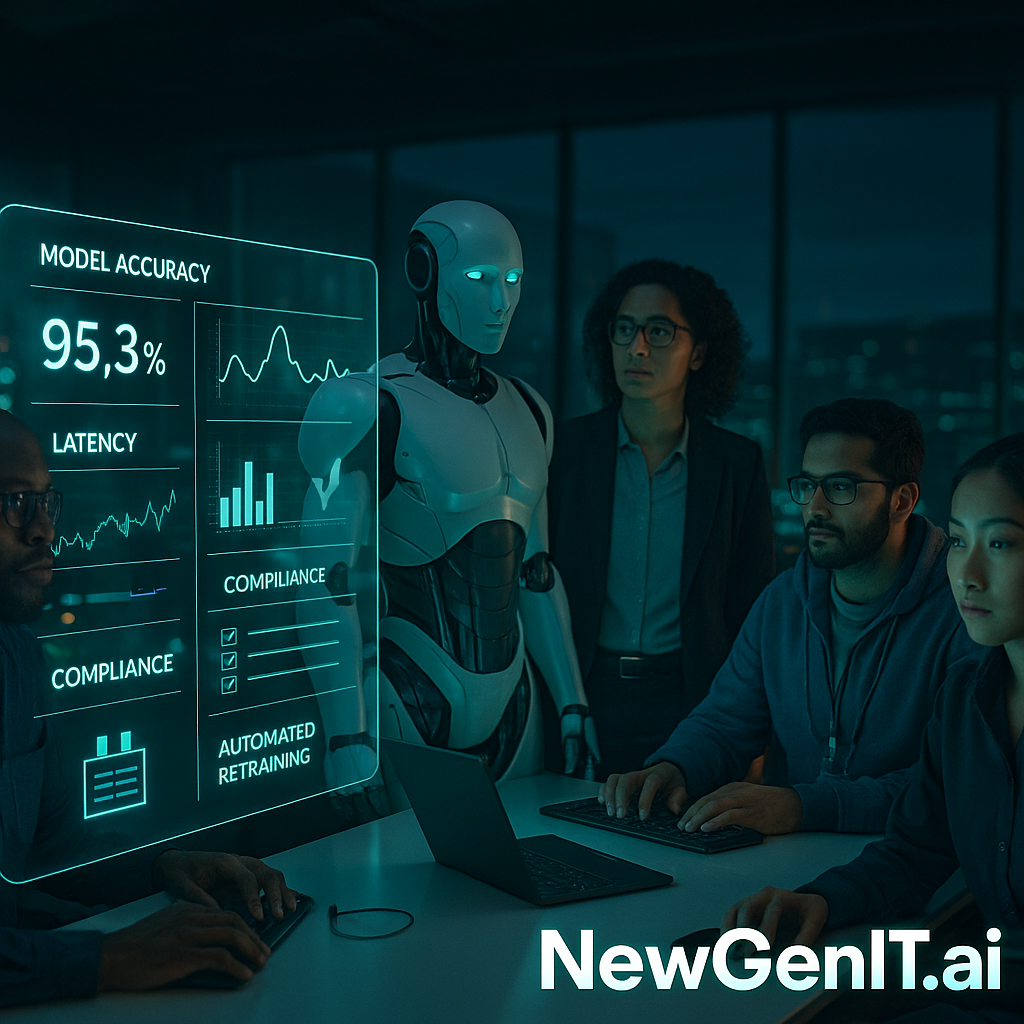
AI models operate in dynamic environments where data patterns can shift quickly , a phenomenon known as data drift. In South Africa, volatility in markets such as retail, banking, or telecommunications means AI model accuracy can degrade without warning. NewGenIT implements continuous real-time performance monitoring on key metrics like model accuracy, latency, and throughput.
For example, if a fraud detection AI model deployed for a South African bank serving millions of Rand transactions begins to show a dip from 95.3% accuracy to 90% over a few weeks, the system alerts the managed operations team. Latency monitoring is particularly crucial in local e-commerce platforms during peak periods or sales, where slow AI response can cause costly user experience issues and lost revenue.
Monitoring dashboards and alerts enable proactive troubleshooting and incremental improvements, reducing system downtime and enabling IT teams to maintain trust in AI decisions.
Model Maintenance: Sustaining Relevance Through Adaptation
AI isn’t a set-and-forget solution; it requires ongoing maintenance to stay relevant. NewGenIT supports continuous, automated retraining and parameter tuning based on incoming data to adapt models to new behavioural patterns.
Consider a logistics company in Durban leveraging AI for route optimisation. Seasonal changes, roadworks, or even localised fuel price fluctuations impact operational data. Without retraining, the AI model’s recommendations become outdated, leading to inefficiencies.
By integrating automated retraining pipelines, NewGenIT ensures models evolve responsively without burdening South African IT teams, who often operate under resource and skill constraints.
Infrastructure Management: Coping with South African Realities
AI workloads demand robust infrastructure for scalability and availability , no easy feat in regions affected by load-shedding or limited connectivity. NewGenIT’s managed operations include infrastructure oversight tailored to local challenges.
This means utilising hybrid cloud architectures or edge computing in Johannesburg’s Sandton financial district to reduce latency, with failover strategies accommodating power outages. Proactive incident management keeps AI services stable even during Eskom load interruptions, critical to maintaining services in banking, healthcare, and retail sectors.
Resource optimisation minimises costs in South African Rand, often a decisive factor for publicly listed companies and government entities allocating IT budgets carefully amidst inflationary pressures.
Compliance and Security: Adhering to POPIA and Beyond
Compliance with South Africa’s Protection of Personal Information Act (POPIA) is non-negotiable for AI applications processing personal data. NewGenIT manages ongoing audits and updates to ensure AI workflows and data handling meet legal and ethical standards.
Security is another pillar. AI systems are potential targets for cyberattacks aiming to manipulate outcomes or extract sensitive insights. NewGenIT integrates continuous vulnerability assessments, patch management, and incident response protocols aligned with South African cybersecurity frameworks.
These practices protect organisations’ reputations and prevent financial losses, which can be particularly damaging in local competitive markets such as Cape Town’s tech sector.
Detailed Reporting: Transparency That Empowers Decision-Making
Confidence in AI investments hinges on clear, actionable insights. NewGenIT provides transparent dashboards and comprehensive reports detailing AI operational health, usage statistics, and tangible business impacts.
For instance, a retail chain in Pretoria can assess sales uplift linked to AI-driven recommendations through monthly performance reports, justifying budgets and guiding strategy refinement. These reports also help data governance officers ensure ongoing POPIA compliance, reducing audit risks.
Such documentation bridges communication between IT units, business leaders, and external auditors, fostering an environment of accountability and continuous improvement.
Unlocking AI’s Long-Term Value: Why Managed Operations Matter
Industry leaders globally and within South Africa agree that the ‘go live’ date is not the end, it is the beginning of an AI lifecycle needing continuous care. NewGenIT’s managed AI operations reduce downtime, improve system trustworthiness, and ultimately maximise return on AI investments.
In a market where the cost of AI downtime can translate into thousands or millions of Rand lost in productivity or customer dissatisfaction, the value of expert operations can far outweigh the expenses. For example, avoiding a single 1-hour outage in credit scoring AI operations affecting thousands of loan applications can save considerable delayed revenue and reputational damage.
Conclusion & Practical Takeaways for South African IT Leaders
- Prioritise performance monitoring with local data considerations and timely alerts to mitigate AI model decay.
- Adopt automated model maintenance to keep AI systems aligned with dynamic business realities, reducing manual overhead.
- Design infrastructure resilience strategies around South African issues such as load-shedding, using hybrid cloud or on-premise setups strategically.
- Ensure continuous compliance and security to meet POPIA requirements and protect AI systems against increasingly sophisticated cyber threats.
- Leverage detailed reporting to inform key stakeholders and validate AI outcomes for sustained investment.
NewGenIT’s managed AI operations empowers South African IT leaders, engineers, and decision-makers to move beyond deployment challenges, transforming AI from a project milestone into a strategic asset.
Discussion Question
How is your IT team currently managing AI performance and compliance post-deployment in the South African environment? What specific challenges or successes have you encountered, especially related to local issues like load-shedding or POPIA? Share your experiences below.