
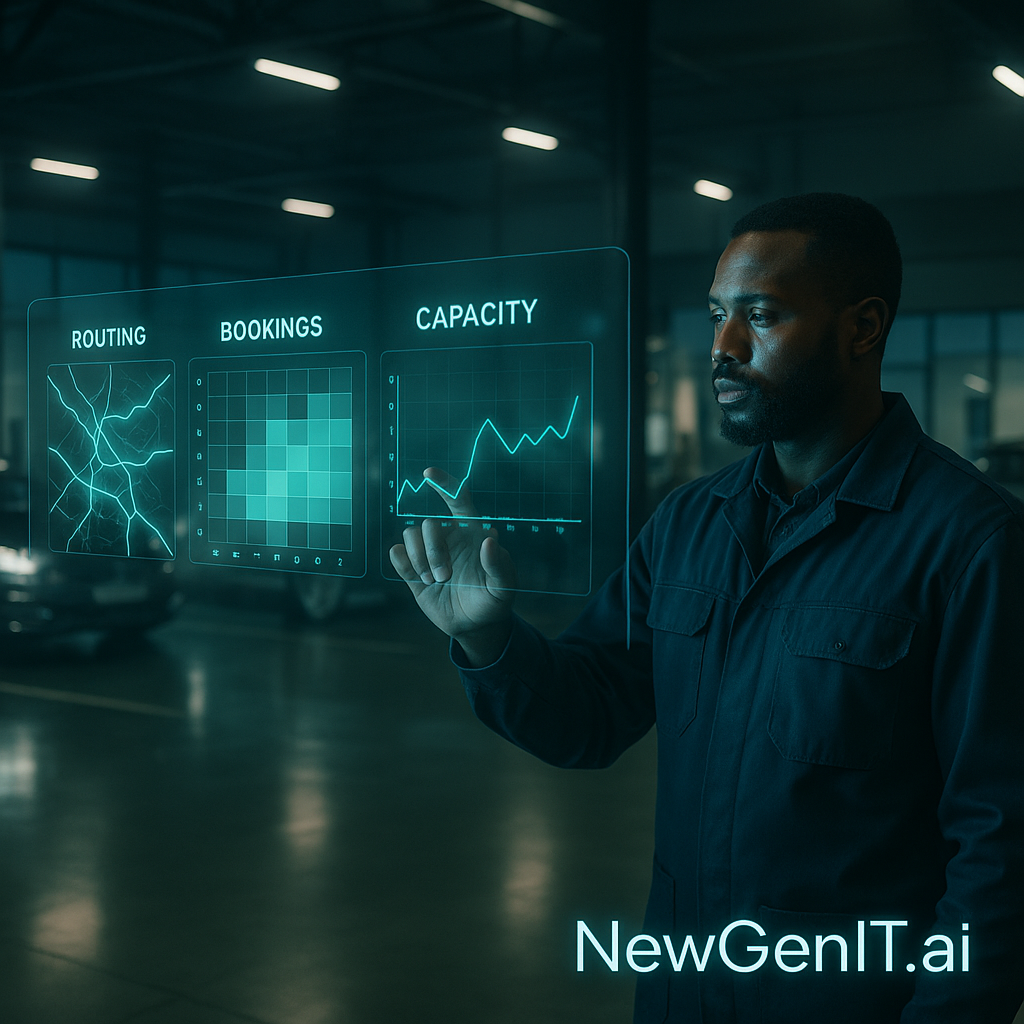
In the ever-evolving automotive industry of South Africa, dealerships face unique operational challenges intensified by local economic conditions, infrastructural limitations, and customer expectations. Load-shedding frequently disrupts business continuity, while compliance with regulations like POPIA imposes stringent requirements on data management in AI systems. Against this backdrop, forward deployed artificial intelligence (AI) emerges as a pivotal solution to revolutionize the way dealerships manage bookings, routing, and capacity.
The South African Automotive Dealership Landscape: Challenges and Opportunities
The South African automotive sector , spanning hubs like Sandton, Durban, and Cape Town , operates within a complex environment shaped by factors including economic volatility, fluctuating consumer demand, and infrastructural stress. Dealerships, often juggling extensive service appointments and vehicle sales, must also manage operational costs constrained by the rand’s volatility.
Operational inefficiencies commonly arise from manual or semi-automated scheduling systems, suboptimal routing of service vehicles within sprawling dealership yards, and limited capacity management capabilities. Load-shedding further complicates the picture by interrupting digital systems, requiring resilient and adaptive AI integration.
What is Forward Deployed AI and Why it Matters for Dealerships
Forward deployed AI refers to the localised implementation of AI systems directly where operations occur, rather than relying on remote or cloud-based solutions. For South African dealerships, this means embedding intelligent automation within service bays, booking desks, and logistics departments to enable proactive operational management.
This proactive intelligence allows dealerships to:
- Foresee demand peaks: Predict high-volume booking periods linked to economic cycles or seasonal trends.
- Optimise staff allocation: Adjust workforce capacity ahead of surges or slow periods.
- Reduce wait and transit times: Improve customer satisfaction and increase throughput.
- Adapt to power interruptions: Maintain critical system performance during load-shedding.
AI-Powered Booking Systems: Precision Scheduling in a Complex Market
Traditional booking systems frequently underperform during peak periods, leading to long wait times, bottlenecks, and lost revenue. Forward deployed AI integrates historical dealership data, customer behaviour patterns, and external factors such as public holidays or major events in Gauteng and KwaZulu-Natal to anticipate demand spikes.
For example, a dealership in Durban experienced a 25% increase in scheduling efficiency by deploying an AI-driven booking platform that automatically suggests available slots, balances workloads across technicians, and sends real-time updates to customers.
Beyond efficiency, these systems are designed to comply with POPIA regulations by securing customer data during booking processes, building trust in the brand and ensuring regulatory adherence.
Routing Algorithms: Streamlining Vehicle Movement in Dealerships
Routing AI optimises the movement of vehicles through service areas, parts departments, and pick-up points. In large dealerships such as those in Sandton, inefficient routing can result in prolonged wait times and resource wastage.
Advanced AI algorithms continuously analyse vehicle flow and dynamically recalibrate routing strategies to minimise congestion. This can decrease average wait times by up to 30%, according to benchmarking studies in comparable markets.
Furthermore, routing AI can factor in load-shedding schedules, ensuring that critical pathways remain functional even during power outages, and can reroute vehicles or adjust service bay assignments accordingly.
Capacity Management: Predictive Analytics for Dynamic Resource Allocation
Managing workshop capacity remains a critical challenge, especially during unpredictable demand surges influenced by local economic shifts or promotional campaigns. Forward deployed AI uses predictive analytics to forecast upcoming service volume, parts inventory needs, and technician availability.
For a Cape Town dealership, implementing AI-driven capacity management led to a 20% reduction in overtime costs by aligning staffing levels more closely with predicted workload, all while improving customer vehicle turnaround time by an average of two hours.
This agility is particularly valuable in South Africa's market where external disruptions, such as transport delays or supply chain impacts, require rapid operational adjustments.
Business Impact: The ROI of Forward Deployed AI in South African Dealerships
Investment in forward deployed AI delivers measurable business benefits, including:
- Reduced operational costs: Automated scheduling and routing minimise idle time and maximise asset utilisation.
- Increased customer retention: Faster service and predictable scheduling improve customer satisfaction.
- Compliance confidence: Built-in data protection measures ensure POPIA compliance.
- Resilience to load-shedding: On-premises AI systems maintain operations during power outages.
South African dealerships report potential cost savings of up to R2 million annually through optimisation of workflow and resource allocation, alongside revenue growth due to enhanced customer experience.
Implementing Forward Deployed AI: Practical Considerations and Best Practices
Successful AI deployment requires careful planning and execution tailored to the South African market:
- Data integrity and governance: Ensure all AI models respect POPIA for customer data privacy.
- Infrastructure readiness: Mitigate load-shedding impact by investing in backup power solutions and local edge computing.
- Skilled workforce: Train engineers and technicians on AI system use and maintenance.
- Incremental deployment: Start with booking systems followed by routing and capacity management integration.
Collaborations between AI firms like NewGenIT.ai and local dealerships can accelerate these processes, delivering customised solutions that precisely match operational realities.
Conclusion: The Future of South African Automotive Dealerships is Intelligent and Forward Deployed
Forward deployed AI is not merely a tool for automation but a strategic enabler that empowers South African automotive dealerships to meet contemporary demands efficiently. By addressing unique challenges such as load-shedding and POPIA compliance while improving operational throughput, this technology offers a clear competitive edge.
As AI adoption grows in the automotive sector, dealerships in major metros including Sandton, Durban, and Cape Town will increasingly find that forward deployed AI is essential to sustaining profitability and enhancing customer loyalty.
Discussion: What challenges have you encountered when deploying AI in South African automotive environments, and how do you see forward deployed AI reshaping the future of our dealerships? Share your insights and experiences below.