
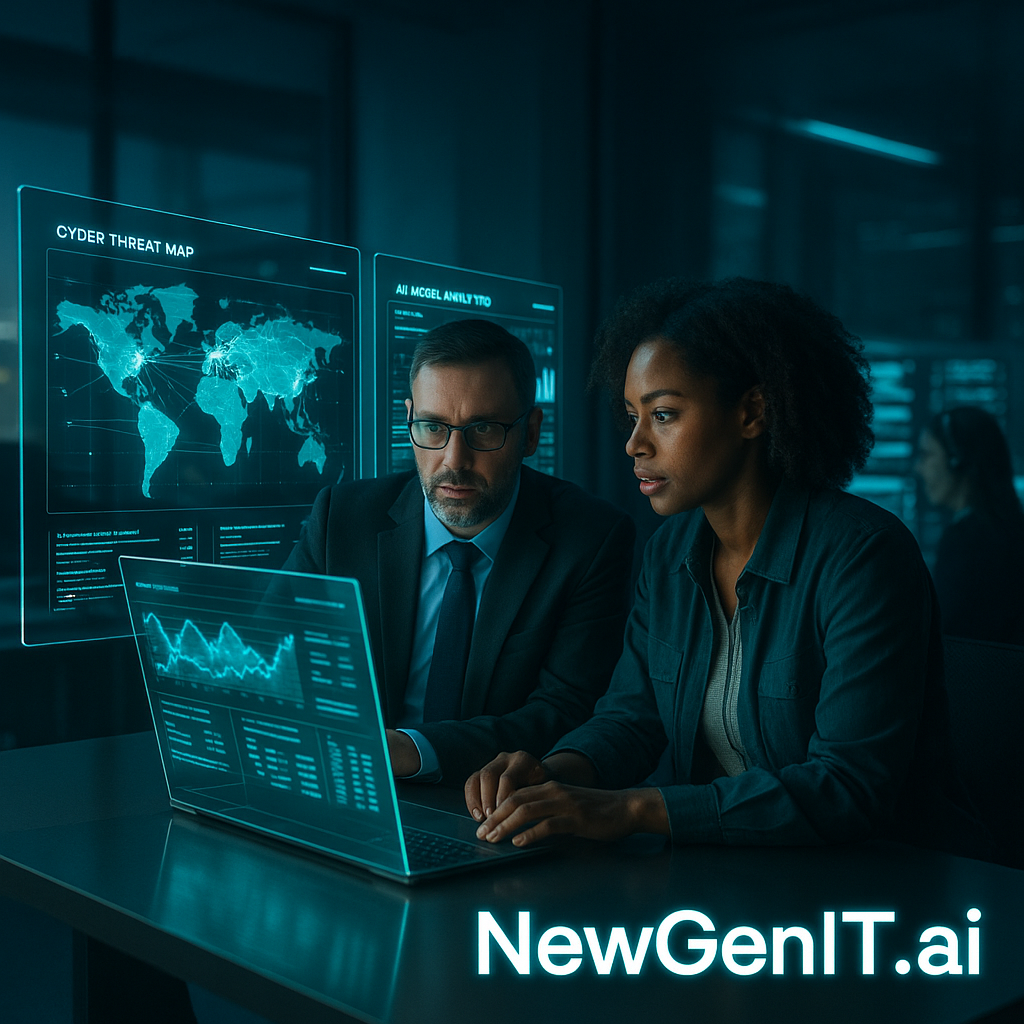
In South Africa’s increasingly complex cybersecurity landscape, Chief Information Security Officers (CISOs) face multiple challenges from persistent threats and operational realities like load-shedding and strict data protection regulations (POPIA). As artificial intelligence (AI) continues to evolve as a game-changing force in cybersecurity, CISOs must critically evaluate how to best integrate AI capabilities to safeguard their organisations effectively. The decision often boils down to choosing between traditional AI agency partnerships or adopting a Forward Deployed AI Engineering (FDAIE) model.
This article provides a comprehensive analysis of why the forward deployed AI engineering model stands out as the preferred approach for South African companies, especially those operating within tech hubs such as Sandton, Cape Town, and Durban.
Understanding Forward Deployed AI Engineering
Forward Deployed AI Engineering represents a paradigm shift from the conventional outsourcing approach to AI. Rather than providing generic, out-of-the-box AI solutions, Forward Deployed AI Engineers embed themselves directly within client organisations. This close collaboration with internal cybersecurity teams allows for the custom design, development, and continual optimisation of AI-driven security tools tailored to the company's unique operational environment and threat profile.
In practice, this means FDAIE engineers are on the ground, whether on-site in a Johannesburg financial institution or supporting a Cape Town-based manufacturing firm, supporting iterative development cycles, rapid troubleshooting, and immediate contextual feedback loops. This embedded presence is crucial in fast-evolving threat landscapes, where static or poorly integrated AI solutions can quickly become obsolete.
Why Traditional AI Agency Models Struggle in South Africa
Traditional AI agencies often work with fixed scopes and deliverables, providing one-size-fits-all AI applications that lack the flexibility to adjust to the dynamic and peculiar cybersecurity challenges faced by South African enterprises. Several factors contribute to this problem:
- Lack of contextual depth: Outsourced AI teams typically operate remotely and lack visibility into the client’s infrastructure nuances, culture, and local threat vectors, such as those emerging in the African digital landscape.
- Insufficient continuous engagement: Cybersecurity threats do not adhere to project timelines. Agencies' limited involvement post-deployment restricts real-time tuning necessary to keep AI systems effective against sophisticated attackers.
- Compliance challenges: South Africa's Protection of Personal Information Act (POPIA) poses rigorous requirements for data handling and security. Generic AI products often fall short in ensuring compliance, especially when data sovereignty and privacy considerations require precise control and transparency.
- Operational limitations due to infrastructural realities: Load-shedding frequently disrupts consistent network and power availability in many regions, complicating reliance on cloud-dependent or remotely managed AI tools.
These constraints often result in underperforming AI solutions, delayed response times, and suboptimal return on investment (ROI). For example, a Johannesburg-based retail bank deploying an off-the-shelf AI fraud detection system from an overseas provider might find it incapable of adapting to local transactional patterns and emerging cyber threats, leading to increased false positives or missed detections.
How Forward Deployed AI Engineering Addresses These Challenges
FDAIE is designed to overcome traditional model shortfalls by embedding expertise directly into client organisations. This approach delivers several tangible advantages:
- Deep organisational knowledge: Engineers work daily alongside security teams and other departments, gaining an intimate understanding of business processes, user behaviours, and existing security infrastructure.
- Agile and continuous optimisation: Being on-site or closely integrated means AI models can be refined in near real-time, aligning responses with emerging threat patterns identified locally or regionally.
- Regulatory alignment: Embedded engineers collaborate closely with compliance officers to ensure AI solutions meet POPIA's strict data processing standards, including local data residency and auditability requirements.
- Operational resilience: Locally deployed AI tools can be designed to function efficiently in low-bandwidth or intermittently powered environments. For instance, incorporating edge computing methods mitigates load-shedding impacts common in Gauteng or KwaZulu-Natal regions.
In a practical example, a Durban-based logistics firm leveraged FDAIE to build a custom AI-powered threat detection platform. Over six months, the embedded AI team iteratively refined the system to analyse internal telemetry in the context of their specific supply chains and operational schedules, resulting in a 35% improvement in threat detection accuracy and a 50% reduction in false alarms.
Cost Considerations and ROI in the South African Market
One common hesitation for South African organisations, especially SMEs, revolves around cost. Outsourcing AI to agencies may appear cheaper upfront but often incurs hidden expenses due to poor alignment and ongoing adjustments. Meanwhile, forward deployment implies a more upfront investment in dedicated human capital.
However, the ROI story for FDAIE is compelling once the total cost of ownership and operational impact is considered:
- Reduction in breach costs: According to IBM’s Cost of a Data Breach Report 2023, South African firms face an average breach cost near ZAR 63 million (approx. USD 3.4 million). AI-augmented security systems that adapt rapidly can significantly reduce breach frequency and severity.
- Efficiency gains: Embedded AI engineers automate routine threat detection and response tasks, freeing internal teams to focus on strategic challenges. For a medium-sized financial institution in Sandton, this translated into a 25% reduction in security operations centre (SOC) overtime costs within the first year.
- Custom tooling lowers friction: Bespoke AI integrations reduce costly downtime and workarounds, especially critical given South Africa’s infrastructural challenges.
Overall, the FDAIE model aligns expenditure with measurable operational resilience and compliance adherence, presenting a more sustainable investment compared to the episodic costs of remediating breaches or dealing with misaligned AI products.
Implementing Forward Deployed AI Engineering: Practical Steps
Adopting FDAIE requires careful planning and collaboration between IT leadership, cybersecurity teams, and AI engineers. Here are key steps for South African CISOs and decision-makers:
- Assess organisational readiness: Evaluate internal cybersecurity maturity and digitisation levels. FDAIE works best in environments where teams are open to close collaboration and incremental innovation.
- Choose the right partner: Partner with a provider experienced in embedding AI engineers who understand local market and compliance dynamics, such as NewGenIT.ai.
- Define clear objectives: Establish measurable goals for AI-driven security improvements aligned with enterprise risk tolerance and POPIA requirements.
- Start with pilot projects: Run short-term pilots focused on specific pain points, such as phishing detection or fraud prevention, to demonstrate quick wins and build stakeholder confidence.
- Embed engineers fully: Integrate FDAIE talent physically or virtually into security teams, ensuring they participate in daily operations, strategy sessions, and incident response drills.
- Monitor and iterate: Implement continuous feedback loops with transparent reporting mechanisms to measure effectiveness and adapt AI models as threats evolve.
Future Outlook for AI in South African Cybersecurity
As cyber adversaries grow more sophisticated, leveraging AI themselves, South African organisations cannot afford to treat AI as a mere compliance checkbox or isolated toolkit. Forward Deployed AI Engineering stands to be a cornerstone of resilient cybersecurity postures, enabling real-time collaboration, innovation, and tailored response capabilities unique to each enterprise.
Furthermore, as the AI talent pool grows in key metropolitan areas like Cape Town and Sandton, there's an opportunity for firms to cultivate local expertise that understands regional cyber risk profiles instead of relying heavily on international agencies. This localisation will be essential in addressing complex challenges such as supply chain security, online financial fraud, and critical infrastructure protection.
Conclusion and Discussion
Forward Deployed AI Engineering offers a practical, effective alternative to traditional AI agency models for South African CISOs aiming to embed AI as a strategic asset within their cybersecurity strategies. By overcoming the limitations of one-off projects and remote engagements, the FDAIE model supports continuous adaptation to evolving threats, compliance with POPIA, and operational resilience amid infrastructural constraints like load-shedding.
For organisations ready to make this shift, the rewards are tangible, improved detection accuracy, reduced operational costs, and a stronger defence posture against sophisticated cyber adversaries.
How has your organisation approached AI integration within the security function? What lessons have you learned from working with traditional agencies versus forward deployed models? We invite CISOs and technology leaders across South Africa to share their insights and experiences.