
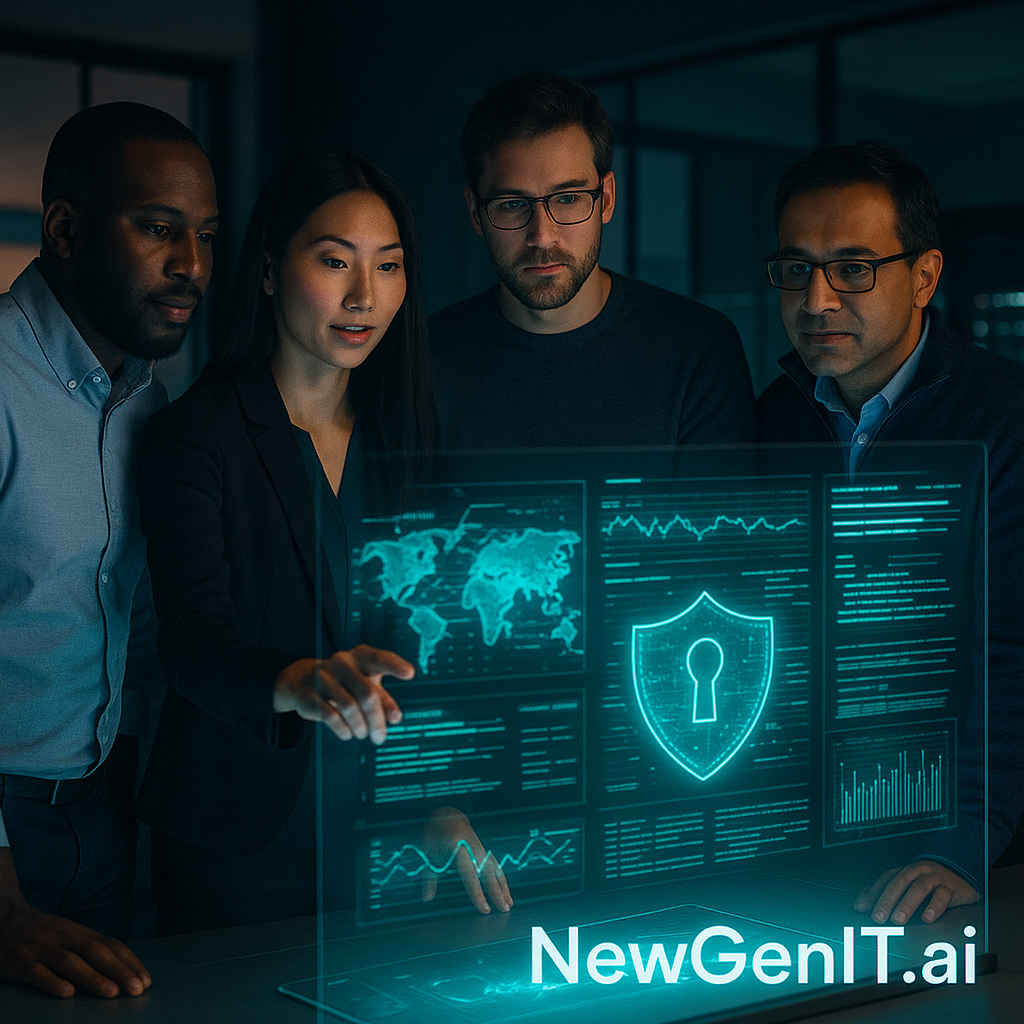
In South Africa's rapidly evolving digital landscape, Chief Information Security Officers (CISOs) face escalating threats compounded by local challenges such as load-shedding, regulatory compliance requirements under the Protection of Personal Information Act (POPIA), and a growing dependency on AI-driven cybersecurity solutions. While AI promises groundbreaking capabilities for threat detection and incident response, traditional AI agency models frequently fail to deliver sustained value and security alignment. Understanding the paradigm shift offered by Forward Deployed AI Engineering (FDAI) is critical for South African IT leaders and business decision-makers intending to safeguard their organizations effectively.
The Limitations of the Traditional AI Agency Model in South Africa
Conventional AI agencies typically operate on a project basis: they design and deliver an AI solution, then hand it over to the client, often with minimal ongoing engagement. This one-off delivery model poses several issues within South Africa’s unique operating environment:
- Fragmented Integration: Solutions delivered in isolation struggle to integrate seamlessly with existing cybersecurity ecosystems, limiting their real-time efficacy.
- Security Compliance Risks: Agencies usually lack continuous involvement to navigate evolving POPIA regulations, increasing the risk of non-compliance as data protection rules tighten.
- Reactive Rather than Proactive: The absence of embedded AI expertise hampers swift adaptation to new threats and technology shifts, an issue aggravated during times of load-shedding when infrastructure resilience is tested.
For example, a Johannesburg-based financial institution that engaged a traditional AI agency discovered post-project that the AI solution struggled to adapt to emerging phishing tactics, leaving systems exposed during critical reactivation periods post-load-shedding outages.
Defining Forward Deployed AI Engineering
Forward Deployed AI Engineering reframes the AI adoption approach: instead of a transactional handover, FDAI involves embedding AI engineers directly within client teams. This integration drives continuous collaboration, fostering AI solutions that are:
- Tailored to Operational Realities: Built with a deep understanding of local infrastructure constraints and business workflows.
- Scalable and Agile: Designed to evolve with emerging threats and regulatory updates without major redeployment.
- Security-Centric: Developed in adherence to the organization's specific security frameworks and compliance mandates, including POPIA.
Unlike traditional agencies, the FDAI engineers become embedded stakeholders, co-owning both the technology and its security risks, thus offering a dynamic and resilient AI ecosystem.
Addressing South Africa-Specific Challenges Through FDAI
South African enterprises confront distinctive challenges that FDAI is uniquely positioned to address:
- Load-Shedding Impact: Sudden power outages create vulnerabilities within IT infrastructure. Embedded AI teams can design solutions that anticipate disruptions and implement failover mechanisms leveraging AI-driven anomaly detection and rapid recovery protocols.
- POPIA Compliance: With SANRAL, banks, and health organizations facing stringent data privacy audits, ongoing AI adaptation by embedded engineers ensures continuous compliance and proactive data governance adjustments.
- Local Market Dynamics: Operating in hubs like Sandton, Durban, and Cape Town means managing diverse regulatory, infrastructural, and operational conditions. FDAI engineers integrated onsite or virtually can tailor algorithms and monitoring tools aligned to specific market and sector demands.
For instance, a Cape Town-based logistics firm partnering with forward deployed AI engineers was able to reduce fraudulent transactions by over 35% year-over-year by iteratively training bespoke AI models that specifically accounted for regional supply chain disruptions and local fraud patterns during energy outages.
Operational and Financial Advantages of FDAI
From an operational standpoint, embedding AI engineers leads to:
- Faster Incident Response: Real-time threat detection and adaptation reduce breaches’ dwell time, which South African CISOs value amid rising ransomware and phishing attacks.
- Improved Collaboration: With AI experts sitting alongside IT security teams, communication silos dissolve, enabling shared ownership of AI-driven risk management.
- Reduced Technical Debt: Iterative development and deployment minimize costly rework, which in contexts of currency volatility affecting IT budgets, translates directly into sustainable cost savings.
Financially, businesses leveraging FDAI models in South Africa report up to a 20-30% reduction in AI-related project overruns and up to 40% faster deployment cycles. Given the rand’s fluctuating exchange rate impacting imported AI solutions and consultancy fees, the embedded model offers greater cost predictability and operational resilience.
FDAI and Enhancing Cybersecurity Posture
Embedding AI engineers into corporate security teams strengthens cybersecurity in multiple dimensions:
- Reduced Blind Spots: Continuous monitoring and AI tuning detect subtle shifts in attack vectors, essential when threat actors exploit local infrastructure disruptions.
- Dynamic AI Governance: Embedded teams ensure AI ethics, bias mitigation, and governance evolve alongside local data privacy laws and corporate risk appetites.
- Improved Threat Intelligence: Custom AI models integrated with local and international threat feeds enable proactive defence, markedly reducing incident rates.
For a Durban-based telecom operator, embedding AI engineers enabled integration of AI-driven threat response systems that functioned effectively even during green energy shifts and load-shedding, reducing successful breaches by 25% within the first 12 months.
Best Practices for Implementing Forward Deployed AI Engineering in South Africa
To maximize the benefits of FDAI, South African enterprises should consider these practical steps:
- Select AI Engineers with Domain Expertise: Prefer candidates familiar with cybersecurity, local regulatory frameworks, and South African infrastructure challenges.
- Establish Continuous Collaboration Mechanisms: Set up routine cross-departmental sessions that include legal, IT, risk, and compliance teams to inform AI development and tuning.
- Invest in Robust AI Infrastructure: Incorporate redundant power solutions and cloud-based systems to counter local power instability.
- Focus on Agile and Iterative Deployment: Allow AI systems to evolve rapidly, addressing new attack vectors and regulatory changes in near real-time.
By adopting these best practices, businesses in Johannesburg, Cape Town, Durban, and beyond can harness FDAI not just as a technology upgrade, but as a strategic enabler of stronger, adaptive cybersecurity.
Conclusion: The Strategic Imperative for South African CISOs
In a context marked by complex cybersecurity threats, regulatory demands, and infrastructure challenges such as load-shedding, Forward Deployed AI Engineering presents a compelling alternative to outdated agency models. By embedding AI specialists within business and security teams, South African organizations gain a dynamic, compliant, and resilient AI-enabled security posture. This move is more than technological enhancement, it is a strategic necessity to protect sensitive data, streamline compliance with POPIA, and future-proof digital operations.
As CISOs and IT leaders consider the future of AI-driven cybersecurity, the question remains: how will your organisation adapt to fully leverage the embedded, proactive, and security-aligned model that FDAI promises?
Discussion
What has been your experience in integrating AI within your security infrastructure? How do you see Forward Deployed AI Engineering shaping the future of cybersecurity within South African enterprises?
NewGenIT.ai invites IT leaders and security professionals to share insights and continue the conversation on adopting forward deployed AI models tailored for South Africa’s unique challenges.