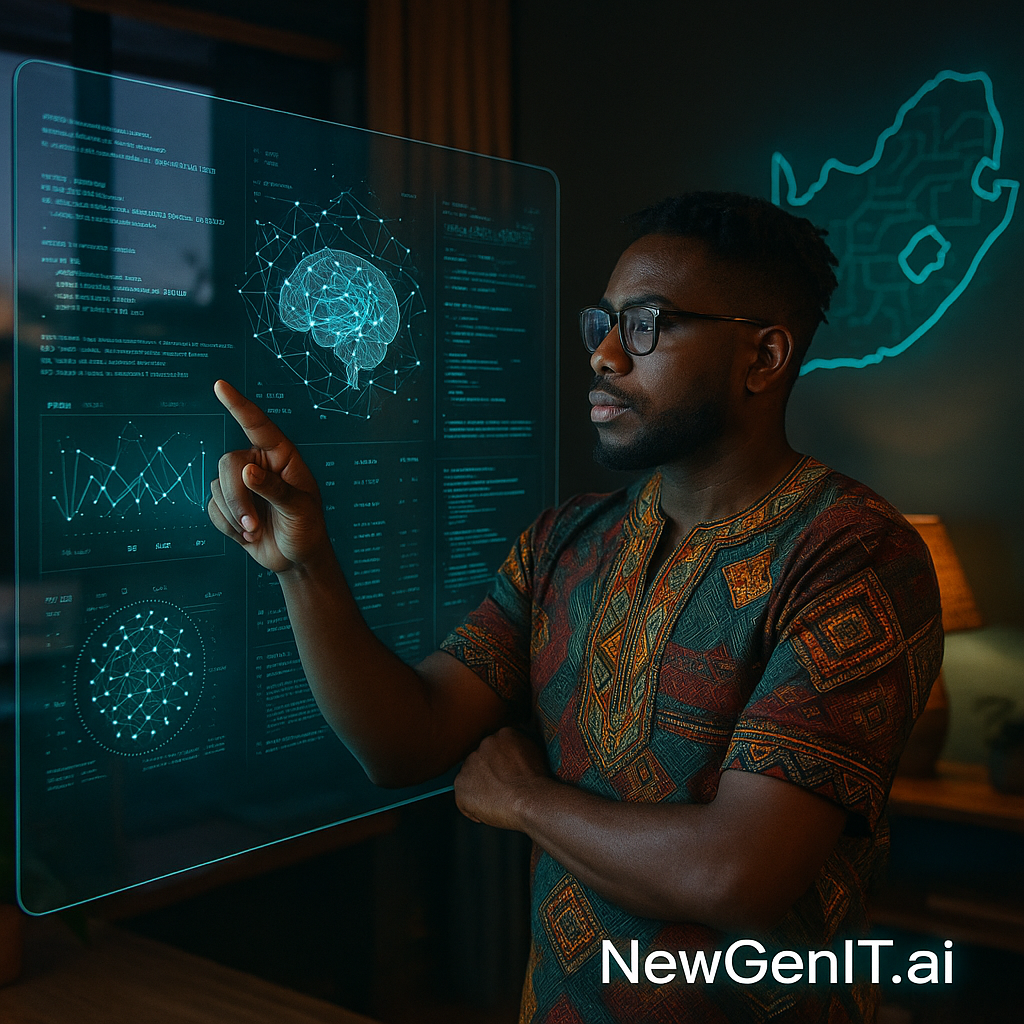
In South Africa’s rapidly evolving technological landscape, the deployment of Artificial Intelligence (AI) is increasingly seen as a critical driver of competitive advantage. Yet, many organisations are still heavily reliant on imported AI vendor tools, off-the-shelf products designed primarily for global markets. While these tools may provide quick automation or analytics solutions, they often fall short in delivering meaningful, sustainable business value within the South African context.
The Limitations of Imported AI Vendor Tools in South Africa
Imported AI tools, whether from Silicon Valley or other tech hubs, come with inherent constraints when applied locally. These platforms are generally built on assumptions and data that do not fully represent South Africa's unique socio-economic and business environment. For example, a customer segmentation AI trained with data from Europe or North America might perform poorly when deployed in Johannesburg’s mixed urban and informal economy markets.
This mismatch can result in integration challenges, unexpected biases, and low adoption rates, especially when local languages, consumer behaviors, and market dynamics differ vastly. It also risks non-compliance with strict data protection regulations like the Protection of Personal Information Act (POPIA), which mandates specific handling and usage of personal data within South Africa.
Moreover, imported AI systems tend to be rigid and difficult to customise without deep technical expertise, limiting their long-term scalability. This often leads organisations into a cycle of recurring costs, from expensive vendor license renewals to costly external consultancy fees for adjustments and troubleshooting.
Embedded AI Engineers as Catalysts for Customised Solutions
Embedding AI engineers within South African businesses, rather than solely relying on external vendors, offers distinct advantages. These professionals bring intimate knowledge of local market conditions, language nuances, and business workflows. They are capable of adapting AI models, tweaking algorithms, and engineering solutions that are pragmatically aligned with real-world challenges such as load-shedding impacts, logistical constraints, and local consumer trends.
For example, an AI team stationed at a Durban logistics firm can tailor predictive maintenance models by incorporating data on local voltage fluctuations due to load-shedding or uneven infrastructure quality. Such custom solutions improve uptime and operational efficiency far beyond what a generic tool could achieve.
Embedded engineers also facilitate continuous improvement by engaging directly with stakeholders to gather feedback and iterate AI systems rapidly. This agility is essential in industries like finance or retail, where market dynamics fluctuate quickly, currency volatility impacts pricing, and compliance requirements evolve.
Strengthening Compliance and Data Governance with Local Expertise
With data privacy law enforcement intensifying in South Africa, organisations must ensure that AI implementations are POPIA-compliant. Embedded AI engineers can design and maintain AI systems that respect user data rights, managing data storage, consent, anonymisation, and audit trails in accordance with local legislation.
Non-compliance can lead to severe financial penalties, legal disputes, and reputational damage. A local AI team understands these risks and integrates safeguards within AI deployments that imported vendor tools often lack by default. They can also assist IT leaders and compliance teams in conducting regular audits and risk assessments, further reducing exposure.
Economic Impacts and the Case for Investing in Local Talent
Embedding AI engineers fosters economic growth within South Africa by creating high-value jobs and nurturing homegrown expertise. When multinational companies operating in hubs like Sandton, Cape Town, or Durban invest in local AI talent, it builds a sustainable ecosystem that benefits not just individual businesses but the broader tech industry.
Consider the cost-effectiveness: while initial investment in hiring and training AI engineers might run from R800,000 to R1.2 million annually per engineer, this expense often offsets the recurring vendor license fees and consultancy costs that can accumulate to similar or higher amounts. Furthermore, the return on investment is higher through faster problem resolution, better alignment with business goals, and the innovation potential of having AI engineers who deeply understand the company’s domain.
Opportunities for Resellers and Service Providers
South African technology resellers and service providers face a pivotal moment. By shifting focus from simply selling imported AI vendor tools to building and placing embedded AI talent within client organisations, they can transform their value proposition. Strategic partnerships centered on talent development elevate reseller roles to trusted advisors and innovation enablers.
This approach helps clients avoid vendor lock-in and achieve higher AI maturity levels. It also opens revenue streams through offering AI training, integration support, custom model development, and ongoing optimisation services. As an example, a reseller partnering with a Johannesburg-based financial services company can embed an AI team on-site to support the development of credit scoring models that accommodate local economic realities better than a generic API could.
Future-Proofing South African AI Initiatives
The AI ecosystem in South Africa is evolving rapidly, with government initiatives supporting innovation and growing demand across sectors such as banking, manufacturing, healthcare, and retail. Businesses investing in embedded AI engineers position themselves to future-proof operations and maintain competitive advantage.
Embedded expertise enables faster adoption of emerging technologies like large language models, computer vision, and real-time predictive analytics, integrated thoughtfully within existing systems. This groundwork will prove essential as South African businesses increasingly harness AI to respond to challenges like energy constraints, supply chain complexities, and customer experience demands.
Conclusion: The Strategic Edge of Embedded AI Talent
In summary, South African businesses should evaluate their AI strategy beyond the allure of imported vendor tools. Embedded AI engineers provide critical advantages: customised solutions rooted in local realities, robust compliance with POPIA, enhanced scalability, and an ongoing capacity for innovation that off-the-shelf products rarely match.
For IT leaders and business decision-makers in South Africa, prioritising investment in local AI talent will yield higher returns, mitigate risks, and empower organisations to become pioneers in AI-driven transformation.
Discussion
What has been your experience with imported AI vendor tools versus embedded AI engineers in South Africa? How do you see the role of local AI talent evolving in your organisation or industry? Share your insights and thoughts below.