
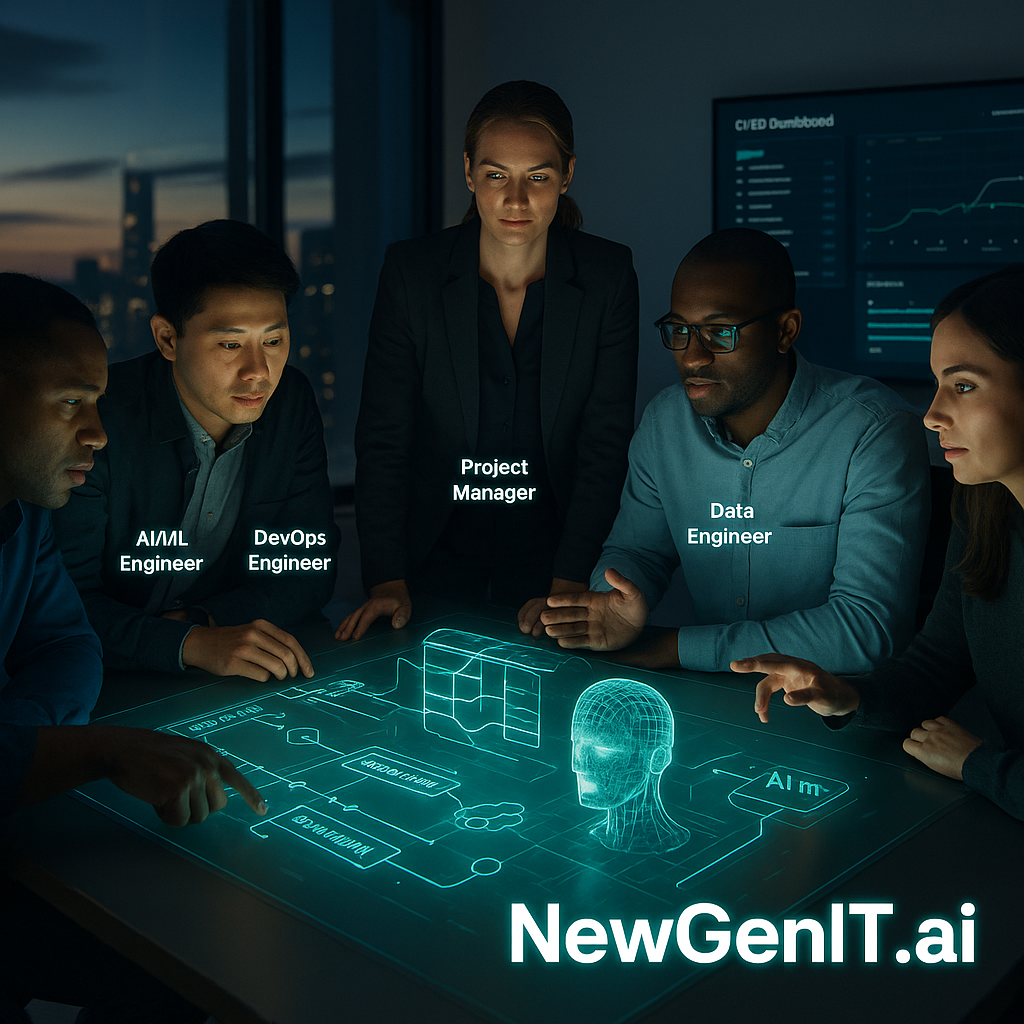
In South Africa’s dynamic technology landscape, where businesses are aggressively adopting artificial intelligence (AI) and machine learning (ML) to gain competitive advantages, the robust deployment of these solutions is as critical as the model development itself. At NewGenIT, a forward-deployed AI engineering firm serving clients from Sandton to Durban and Cape Town, we have pioneered a client-centric approach to AI deployment through specialized deployment pods. These teams with clearly defined roles and ownership drive accountability, streamline processes, and deliver measurable success to South African organisations navigating complex environments impacted by load-shedding, regulatory compliance, and market volatility.
Understanding Deployment Pods: What They Are and Why They Matter
A deployment pod, in NewGenIT’s framework, is a cross-functional unit tailored to the specifics of each client engagement. It focuses exclusively on the end-to-end deployment of AI and ML solutions. This means translating research and development (R&D) efforts into reliable, scalable products that impact business decisions and customer experiences.
Why is this relevant in South Africa? The local technology ecosystem faces distinct challenges. Frequent power outages (load-shedding) increase the risk of system downtime, which can severely impact AI services if infrastructure and recovery processes are not bulletproof. Additionally, with the Protection of Personal Information Act (POPIA) in effect, data handling and processing must be meticulously managed throughout deployment to prevent legal penalties.
Therefore, deployment pods act as mini task forces that bring together diverse skills focused on overcoming such challenges, reducing friction from model development to live operations.
Key Roles Within NewGenIT Deployment Pods
Each role within our pods is more than simply a job title, they are accountable owners of critical stages in the AI deployment lifecycle:
- AI/ML Engineers: Central to crafting robust models, these engineers work to develop and optimize algorithms that satisfy client KPIs. They ensure models are adaptable to South Africa’s data environments and regulatory requirements. For example, a banking client in Johannesburg may require fraud detection models that comply with POPIA’s privacy mandates.
- DevOps Engineers: Given the country’s infrastructure volatility, DevOps specialists build resilient CI/CD pipelines and monitor deployment environments. They integrate failover mechanisms, often deploying containerized applications in cloud platforms hosted locally to curb latency and ensure compliance.
- Project Managers: From their offices in Cape Town or Durban, they synchronize all stakeholders, client teams, engineers, and external vendors, maintaining transparent timelines and managing risks especially relevant in SA’s fluctuating business environment.
- Data Engineers: These professionals design and maintain scalable, clean data pipelines appropriate to South African data schemas, ensuring that data provenance and lineage are clearly documented to support POPIA audits.
- Quality Assurance Analysts: They rigorously test both the AI system outputs and the deployment environments before and after launch. For example, they will validate model accuracy under different power conditions simulated to reflect South Africa’s load-shedding scenarios.
This clear delineation of responsibilities means each role contributes to a smooth, dependable AI deployment service that clients can trust.
Ownership and Accountability: Pillars of Effective Deployment
At NewGenIT, the success of deployment pods hinges on precise ownership. Every deliverable and checkpoint, from model performance metrics to infrastructure uptime, is assigned a responsible team member. This not only fosters proactive problem solving but also boosts team morale through transparent acknowledgment of contributions.
In practical terms, this means if a deployment pipeline fails during load-shedding hours in Durban, the DevOps engineer is immediately accountable for resolution, while the project manager communicates status updates to the client in Sandton. This structured approach drastically reduces downtime and builds stronger client relationships.
Benefits of the Deployment Pod Approach Backed by NewGenIT Experience
Our pod-based methodology has yielded substantial improvements in deployment efficiency and client satisfaction. Some measurable benefits include:
- Faster Time-to-Value: Deployment timelines are shortened by up to 30% compared to traditional siloed teams, enabling clients like retail chains in Cape Town to launch AI-powered inventory management systems ahead of peak seasons.
- Reduced Integration Issues: When roles overlap or responsibilities are unclear, integration bottlenecks increase costs and delay launches. Our pods reduce these issues, lowering post-deployment bugs by nearly 40%.
- Enhanced Compliance Readiness: Compliance with POPIA and other regulations is seamlessly incorporated into deployment checkpoints, mitigating risks of costly data breaches and fines.
- Improved Stakeholder Communication: Clients benefit from real-time progress tracking and clear points of contact, fostering trust and collaborative problem solving.
Practical Takeaways for South African IT Leaders and Engineers
If you are leading AI deployment initiatives in South Africa, consider adopting or adapting the deployment pod framework. Here are actionable steps to implement:
- Define Clear Roles and Responsibilities: Avoid ambiguity by mapping out critical deployment tasks and assigning them to qualified individuals early in the project.
- Accountability Framework: Establish checkpoints and deliverables with responsible owners and transparent reporting to ensure issues are quickly surfaced and resolved.
- Plan for Local Constraints: Design systems considering load-shedding patterns, data privacy laws, and local bandwidth limitations especially when working with clients in Gauteng or KwaZulu-Natal regions.
- Cross-Functional Collaboration: Promote open communication among AI/ML engineers, DevOps, project managers, and data experts to anticipate and mitigate risks rather than firefighting late-stage problems.
- Invest in Automation and Monitoring: Automated CI/CD pipelines with robust monitoring tools can minimize manual errors and provide early warnings during deployment phases.
Conclusion: Driving AI Deployment Success in South Africa with Deployment Pods
As AI and ML become indispensable for South African enterprises striving for growth and efficiency, the way these technologies move from concept to production is fundamental. NewGenIT’s deployment pods demonstrate how intentional team structuring with clearly defined roles and ownership improves deployment speed, reduces risks, and ensures compliance, all while enhancing client satisfaction.
Adopting such a model can be particularly valuable in local contexts where infrastructure challenges and strict data protection laws complicate AI deployments.
We invite IT leaders, engineers, and business decision-makers to reflect: How have you structured AI deployment teams within your organisation? What challenges have you faced in defining roles and ensuring ownership? Share your experiences and insights to help shape the future of AI deployment in South Africa.