
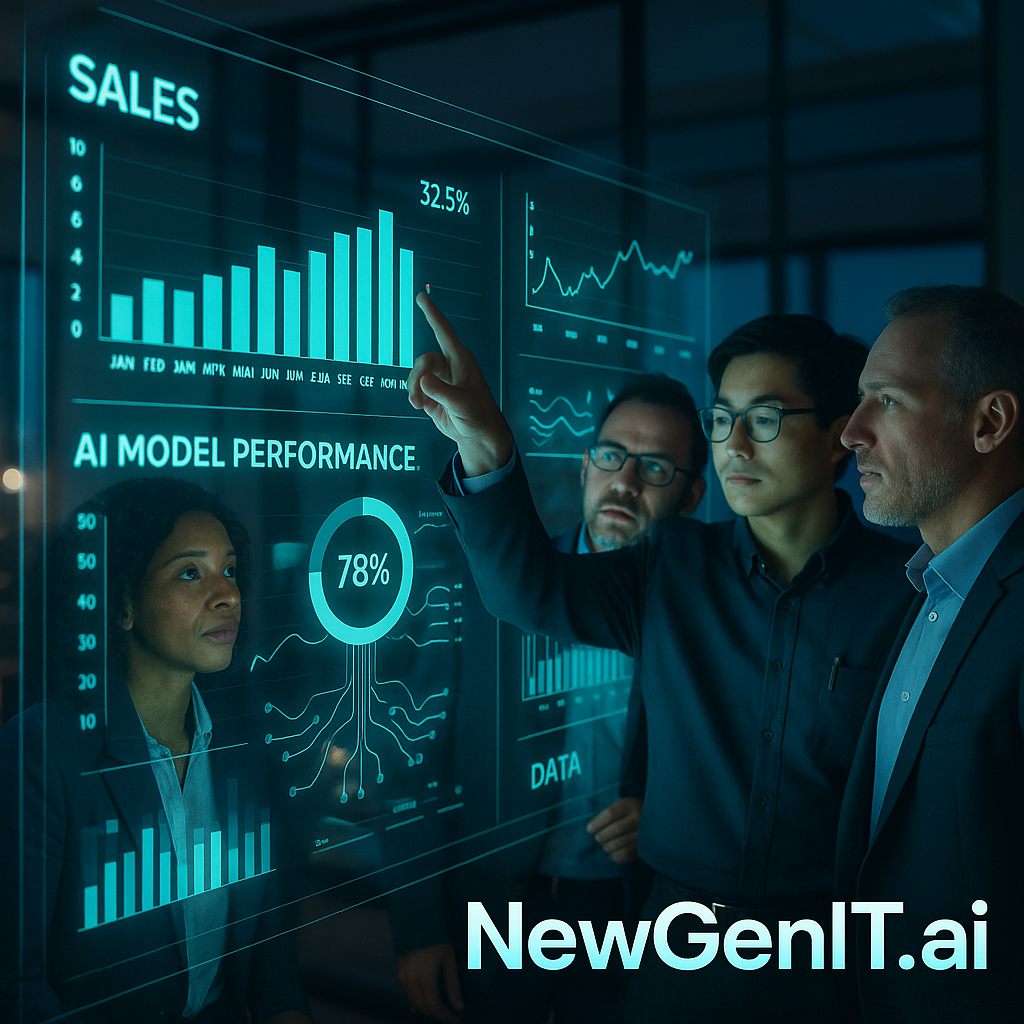
Artificial Intelligence (AI) has rapidly evolved from a futuristic concept to a core element in many South African businesses’ digital transformation strategies. Its promise to revolutionise sales, improve decision-making, and increase efficiency is compelling. Yet, too often, AI projects stall or fail after their initial development phase and handover from data science teams. As IT leaders, engineers, and business decision-makers in South Africa’s dynamic environment, understanding the root causes of these failures and how to overcome them is crucial to unlocking AI’s full potential.
Understanding the Post-Handover AI Project Challenge
In South Africa, where companies face unique operational challenges such as load-shedding, stringent data privacy laws under POPIA (Protection of Personal Information Act), and diverse market conditions across hubs like Johannesburg’s Sandton, Durban, and Cape Town, the sustainable success of AI projects demands more than just technical innovation. The transition phase from AI development to operational deployment is where many projects falter.
Typical issues include:
- Degraded model performance over time: Data pipelines constructed during the development phase often lack robust maintenance processes, leading to data quality issues that cause models to perform poorly.
- Lack of operational ownership: Without designated roles for ongoing model management, updates, and troubleshooting, issues linger and escalate, causing delays and user frustration.
- Poor integration with sales workflows: AI outputs that aren’t tightly woven into the everyday tools sales teams use, such as CRM systems prevalent across South African enterprises, become sidelined experiments rather than business assets.
- Insufficient monitoring and feedback: Without real-world performance tracking and feedback loops, deviations from expected outcomes go unnoticed, eroding trust in AI-generated insights.
The Impact of These Challenges on South African Sales Leaders
For sales leaders operating in competitive South African markets, such as the fintech corridors of Cape Town or the commercial districts of Sandton, these AI project stalls translate directly into lost revenue and reduced competitiveness. Consider a mid-sized retail company in Durban deploying an AI-powered sales forecasting tool. Without reliable data pipelines and regular updates responsive to seasonal buying patterns or supply chain fluctuations caused by energy outages, the tool’s forecasting accuracy may degrade by over 25% within six months , diminishing its value and causing sales leaders to revert to manual methods.
Furthermore, stakeholder confidence in digital transformation initiatives can plummet when AI results are inconsistent or unreliable, increasing resistance to future tech investments.
Frontline Data Engineering (FDE): Bridging the Gap Between AI Development and Operations
Frontline Data Engineering (FDE) addresses this critical handover gap by embedding engineering rigor and operational accountability into AI projects from the start. FDE is not just about maintaining data pipelines; it’s a comprehensive approach to ensuring AI remains accurate, scalable, and actionable in live business environments.
Key FDE principles include:
- Reliable and scalable data pipelines: Ensuring that data ingestion, transformation, and storage are automated, resilient, and continuously tested post-deployment helps South African businesses cope with interruptions like unstable internet or load-shedding events.
- Clear operational ownership: Assigning specific roles and responsibilities across IT, data science, and sales teams eliminates the ‘black box’ effect often found in AI handovers, fostering collaboration and quicker resolution of issues.
- Seamless integration into sales workflows: Embedding AI insights into CRM platforms (e.g., Salesforce or Microsoft Dynamics) that sales teams already use in offices across Johannesburg, Cape Town, and Durban ensures that AI becomes a daily tool, not a siloed experiment.
- Proactive monitoring and automation: Implementing dashboards and automated alerts to track model drift or data anomalies enables rapid intervention, maintaining model accuracy and trust.
Real-World Evidence: South African Companies Benefiting from FDE
Research from global consultancies like Gartner consistently shows that companies with strong data engineering practices alongside AI adoption achieve significantly higher ROI and business impact. Locally, companies in the South African ICT sector adopting FDE have reported:
- A reduction in AI model downtime by up to 40%, despite infrastructure challenges.
- Improved sales conversion rates by 15% within the first quarter after implementing integrated AI-driven insights.
- Compliance assurance with POPIA by integrating automated data governance checks within data pipelines.
One Cape Town-based fintech, facing data sparsity and frequent system outages, leveraged FDE to automate pipeline recovery, resulting in a 30% increase in uptime and more accurate customer risk profiling , crucial for personalised product offerings.
Implementing FDE in Your AI Projects: Practical Steps
For South African IT leaders and engineers, embedding FDE practices requires a strategic approach aligned with local market conditions and compliance requirements. Here are practical takeaways:
- Invest in robust infrastructure: Incorporate solutions that mitigate load-shedding impacts, such as backup power systems and hybrid cloud architectures that provide failover capabilities.
- Design for compliance: Integrate data privacy controls inline with POPIA into pipeline designs from the outset, ensuring data handling adheres to local legal mandates.
- Define and communicate clear roles: Establish cross-functional teams with explicit responsibilities for pipeline maintenance, model monitoring, and continuous integration with sales units.
- Prioritise user-centric integrations: Work closely with sales leaders to tailor AI outputs that fit seamlessly into existing tools and reporting formats, enhancing adoption.
- Automate monitoring and alerting: Deploy real-time dashboards visible to both technical and business stakeholders to track AI health and flag issues early.
Conclusion: Making AI an Enduring Asset in South Africa’s Business Landscape
AI’s potential to transform sales leadership and digital transformation in South Africa is immense, but realising this potential requires more than just initial model building. Frontline Data Engineering bridges the critical gap, turning AI projects into reliable, scalable, and continuously impactful tools. By investing in FDE, South African businesses can safeguard their technology investments, comply with local regulations, and maintain competitive advantages despite infrastructural and market challenges.
For sales leaders and decision-makers, embedding FDE at every stage transforms AI from a “nice-to-have” into an indispensable asset that supports growth and resilience in an evolving digital economy.
Discussion Question
What are the biggest challenges you have encountered during AI project handovers within your sales teams? How have you addressed operational ownership and pipeline reliability to ensure sustained AI success? Share your experiences and strategies to help build a stronger AI community in South Africa.