
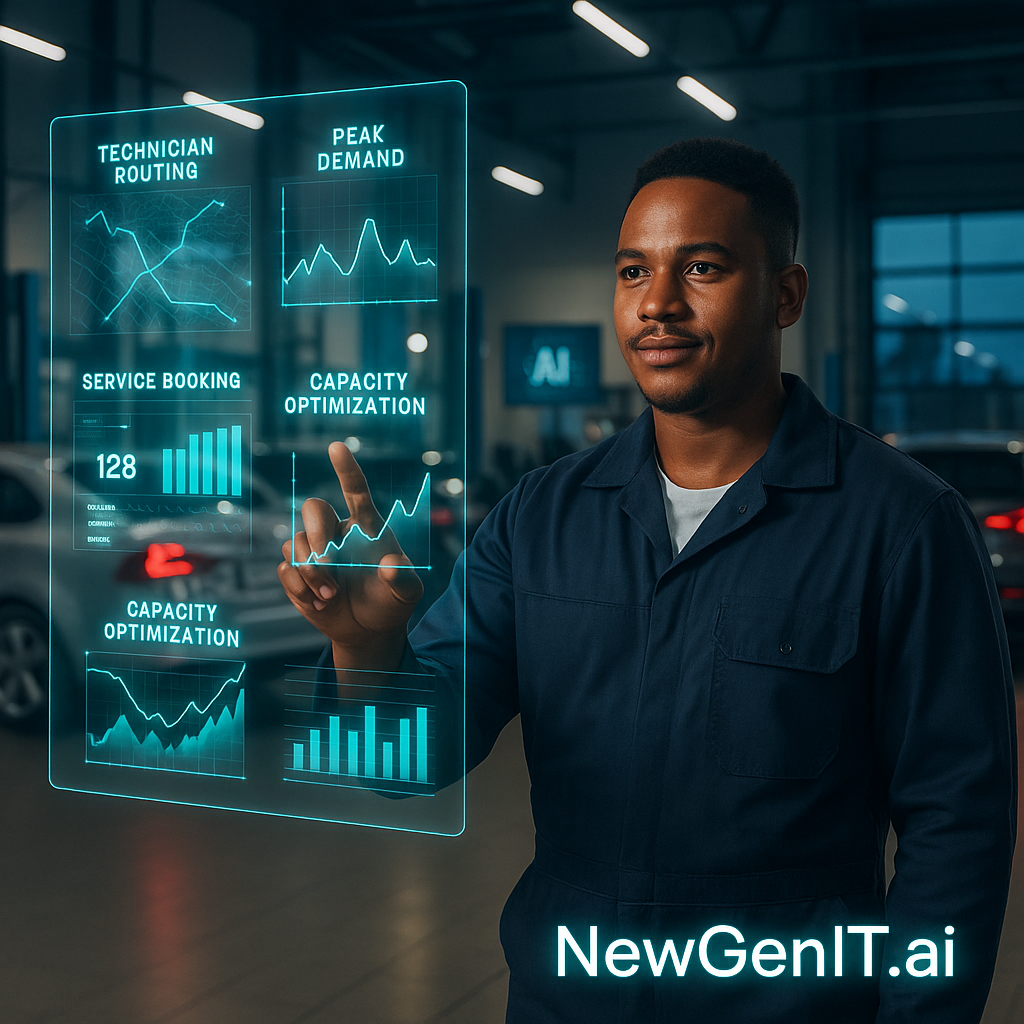
The South African automotive industry is a vital part of the economy, serving millions of vehicle owners across metropolitan hubs like Sandton, Cape Town, and Durban. Yet, dealerships face intense challenges in maintaining operational efficiency amidst rising customer expectations, logistical constraints, and unpredictable external factors such as load-shedding. Forward deployed artificial intelligence (AI) represents a game-changing advancement in addressing these challenges by enabling real-time, on-site operational intelligence within dealerships and service centers.
The Unique Challenges Faced by South African Automotive Dealerships
Automotive dealerships in South Africa grapple with multiple operational hurdles. Load-shedding by Eskom disrupts service schedules and technician availability unpredictably, while compliance with the Protection of Personal Information Act (POPIA) governs data management practices around customer information. Moreover, fluctuating demand, particularly during seasonal peaks or post-holiday periods, complicates resource allocation and capacity planning.
For example, a medium-sized dealership in Durban’s northern suburbs might experience a 25-30% surge in service bookings after long weekends or public holidays, straining technician availability and workshop space. Without accurate demand forecasting, these surges lead to longer customer wait times, inefficiencies, and lost revenue. This is where forward deployed AI steps in, applying machine learning models locally within dealerships to deliver immediate, actionable insights.
What is Forward Deployed AI and Why Does It Matter?
Forward deployed AI involves embedding AI models directly within local dealership systems, be it on-site servers, edge computing devices, or integrated service management platforms. Unlike traditional cloud-based AI solutions, which rely heavily on internet connectivity and centralized computing, this approach ensures low-latency, continuous operations even during network outages or load-shedding events.
The advantages for South African dealerships are compelling:
- Real-Time Decision Making: AI models analyze historical service data and current inputs instantaneously to optimize technician routing and customer bookings.
- Adaptability: Models adapt dynamically to fluctuating market demands and operational constraints.
- Compliance and Security: Keeping sensitive customer data on-site helps dealerships align with POPIA regulations more effectively.
- Operational Resilience: Less dependency on cloud infrastructure reduces risk during power outages or unstable connectivity common in certain regions.
Optimizing Service Booking and Technician Routing
One of the critical inefficiencies in dealerships lies in poor scheduling, booking too many vehicles during peak periods or failing to utilize technicians optimally. Forward deployed AI uses historical booking data and real-time demand forecasting to predict peak periods accurately. For instance, a dealership in Sandton might observe that bookings spike on Fridays between 10 AM and 3 PM, with technician availability dropping 20% due to external appointments.
By analyzing these patterns, AI-powered scheduling systems can:
- Spread out bookings to avoid bottlenecks and reduce customer wait times by up to 30%.
- Automatically route technicians more efficiently between service bays and locations, saving an estimated 15-25% on travel and idle time.
- Prioritize urgent repairs or high-margin services dynamically to maximize revenue.
For example, using forward deployed AI, a dealership in Cape Town could reduce technician downtime during afternoon load-shedding by reassigning tasks proactively, maintaining smooth operations despite unpredictable external disruptions.
Maximizing Capacity Without Compromising Service Quality
Capacity in automotive workshops is a finite resource, influenced not only by physical workspace but also skilled personnel availability and equipment. Forward deployed AI enables proactive capacity planning by continuously monitoring service throughput and predicting upcoming demand. This helps dealerships achieve up to 20% higher workshop utilization without sacrificing quality.
Consider a mid-sized dealership near Umhlanga where the number of available lifts and diagnostic equipment is fixed. By analyzing patterns, the AI can forecast unavoidable peak periods, like during festive seasons when travel spikes, and advise temporary adjustments in staffing or encourage off-peak customer bookings through targeted communications.
Furthermore, forward deployed AI can support robust contingency plans to counteract power outages. During load-shedding phases, for instance, the system could prioritize essential services and automate rescheduling, helping minimize operational downtime and revenue losses, which can amount to hundreds of thousands of rand monthly if unmanaged.
Data Privacy, Compliance, and Security Implications
Dealing with customer and vehicle data requires strict adherence to South Africa's POPIA legislation. Leveraging forward deployed AI solutions ensures that sensitive data remains within the dealership's local network. This localized processing reduces exposure to cyber threats that come with transferring data to and from cloud servers and supports compliance audits.
Additionally, AI models can be trained to anonymize or pseudonymize data automatically, further enhancing privacy safeguards without hindering analytical power. Given that breaches or non-compliance fines under POPIA can reach up to R10 million, safeguarding customer data using local AI infrastructures is not just best practice but essential risk management.
Empowering South African Engineers and Decision-Makers
For IT leaders and engineers in South Africa, forward deployed AI opens a pathway to implement cutting-edge, scalable AI-driven solutions tailored for local automotive markets. It encourages synergy between data science, hardware infrastructure, and business operations within dealerships, transforming traditional service models into streamlined, intelligent ecosystems.
By partnering with firms specializing in this niche AI deployment, like NewGenIT.ai, dealerships can move beyond pilot programs and institute enterprise-grade implementations. These solutions provide real, measurable ROI, for example:
- 30% reduction in customer service wait times
- 20-25% improvements in technician productivity
- Significant operational cost savings through energy-efficient scheduling
- Incremental revenue growth by better managing capacity and demand
Moreover, these living AI models continuously learn and adapt, leveraging operational data to refine processes and remain aligned with evolving market conditions.
Conclusion: The Road Ahead for South African Dealerships
Integrating forward deployed AI represents a strategic investment for South African automotive dealerships aiming to thrive amidst market volatility and operational complexities. The combination of enhanced routing, predictive booking management, and robust capacity planning not only drives operational excellence but also bolsters customer satisfaction, a core competitive advantage in mature markets like Johannesburg and Cape Town.
As the automotive sector embraces AI-powered automation and edge computing, South African dealerships have a powerful opportunity to leapfrog legacy practices, turning technological innovation into well-rounded business outcomes.
Discussion question: How are your dealership or automotive service operations leveraging AI to address local challenges like load-shedding, demand spikes, and capacity management? What barriers and successes have you encountered in integrating forward deployed AI solutions?