The insurance sector in South Africa is at a crucial juncture. With rising customer expectations, regulatory complexities driven by legislation like POPIA, and operational challenges including the impact of load-shedding on business continuity, insurers need innovative strategies to stay ahead. One of the most impactful shifts happening today is the adoption of Full Digital Enablement (FDE) powered by Artificial Intelligence (AI) to transform insurance and claims management. This is not merely a technological upgrade but a fundamental reimagining of how insurers deliver value, engage clients, and optimise processes.
Understanding Full Digital Enablement (FDE) in Insurance
Full Digital Enablement refers to the end-to-end digital transformation of core insurance processes by embedding AI, automation, and advanced data analytics at every step. From the moment a client submits a claim to final settlement, AI tools manage and streamline workflows traditionally plagued by manual intervention and inefficiencies. In South Africa’s context, this means overcoming challenges like unreliable electricity supply due to load-shedding and ensuring compliance with POPIA that governs personal information protection.
In practical terms, for insurers operating in major hubs such as Sandton, Cape Town, or Durban, FDE involves deploying smart triage systems, AI-powered documentation and classification tools, as well as client-facing virtual assistants that operate around the clock. These elements combine to form a seamless digital ecosystem that enhances operational resilience and client satisfaction.
AI-Powered Triage: Prioritising Claims with Precision
A key phase in the claims process is triage, determining claim urgency, complexity, and next steps. Traditional triage often depends on manual assessment, which is time-consuming, inconsistent, and prone to errors. AI-driven triage solutions use natural language processing and machine learning models to evaluate claim descriptions instantly.
For South African insurers processing thousands of claims monthly, AI can reduce initial response times by up to 50%, prioritising high-impact claims immediately and routing simpler claims for quick resolution. For example, an insurer in Johannesburg handling vehicle accident claims can leverage AI to flag claims involving injuries or high-value damages, fast-tracking them for urgent assessment while auto-approving minor property claims.
This prioritisation is vital in improving turnaround times and reducing the backlog exacerbated by operational disruptions like load-shedding affecting physical offices.
Intelligent Documentation: Reducing Errors and Operational Costs
One of the most labour-intensive tasks in claims management is documentation, extracting, verifying, and summarising claim information. AI-powered document processing tools automate this by scanning uploaded documents such as accident reports, medical certificates, and invoices, accurately extracting relevant data fields.
In South Africa, where manual errors can lead to fraudulent claims or compliance breaches under POPIA, these AI tools enhance data accuracy and integrity. Insurers can reduce processing costs by approximately 20-30%, reallocating staff from repetitive data entry to higher-value tasks like fraud analysis and customer engagement.
For instance, a Durban-based health insurance company saw a 25% reduction in claim processing errors after implementing AI document summarisation software integrated with their existing claims management system. This not only accelerated approvals but also safeguarded client data per South African privacy laws.
24/7 AI-Driven Client Support: Enhancing Customer Experience Amidst Market Realities
South African customers face unique challenges when interacting with insurers, from unpredictable power outages to limited office hours in smaller centres outside metropolitan areas. AI-powered chatbots and virtual assistants address these issues by providing uninterrupted, real-time support.
These AI tools handle routine inquiries, status updates, and simple claims submission tasks, reducing reliance on call centres which can be overwhelmed during peak claim periods or crises. For insurance firms operating in Cape Town’s competitive environment, investing in AI chatbots results in significantly improved Net Promoter Scores (NPS) by boosting customer engagement and satisfaction.
Furthermore, chatbots can be tailored for local languages and dialects common in South Africa, enhancing accessibility and inclusivity.
Regulatory Compliance and Data Privacy: Navigating POPIA with AI
Compliance remains a paramount concern. The Protection of Personal Information Act (POPIA) places stringent requirements on insurers to protect client data confidentiality throughout claims processing. Integrating AI solutions must therefore include robust data governance frameworks.
Leading insurers have implemented AI tools designed with privacy-by-design principles, ensuring customer data is encrypted, access-controlled, and auditable. This mitigates risks of data breaches, a critical concern given that breach penalties can cost companies millions of rand in fines and reputational damage.
Moreover, AI systems offer audit trails that assist compliance officers in demonstrating adherence to POPIA during regulatory inspections.
Quantifiable Benefits: Efficiency Gains and Cost Reductions
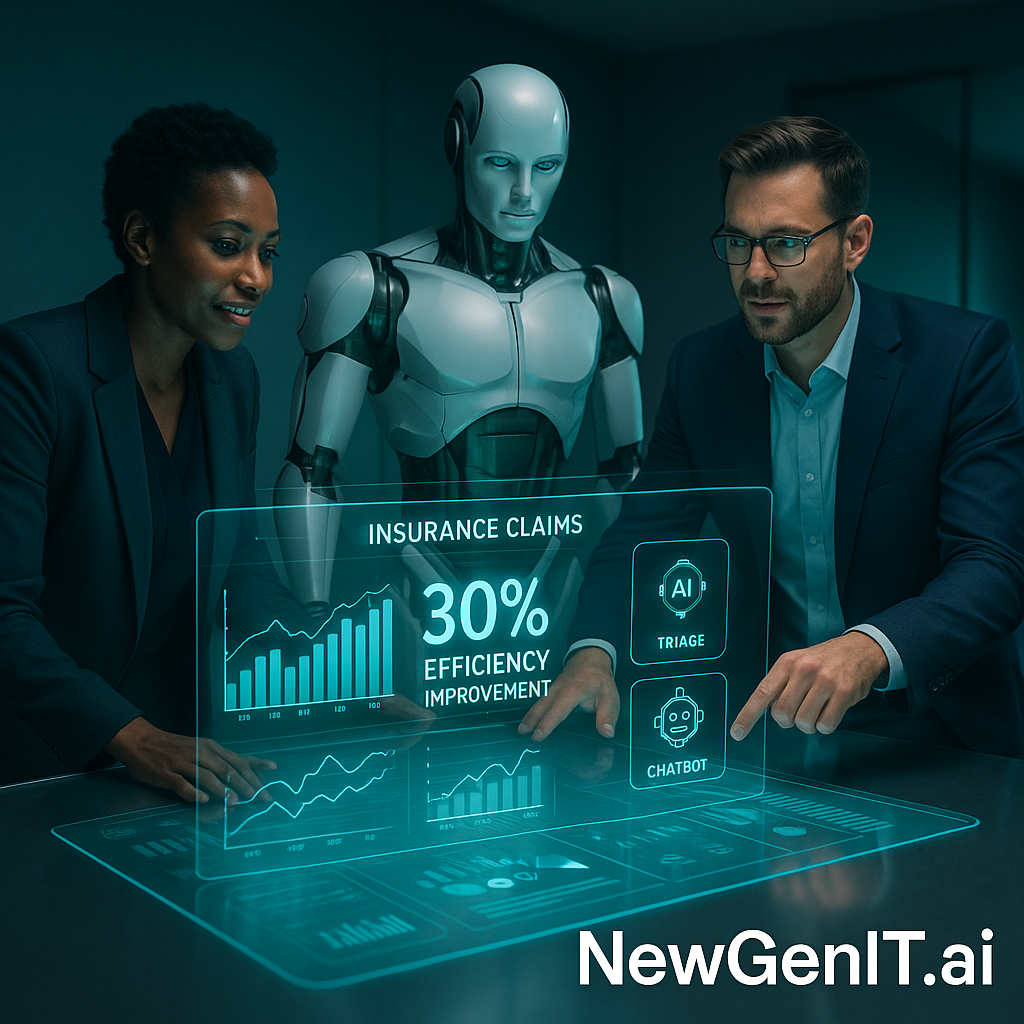
Industry-wide, Deloitte reports that insurers embedding AI within claims operations achieve up to a 30% improvement in operational efficiency. Locally, that can translate into millions of rand saved annually. Consider a mid-sized South African insurer processing 10,000 claims per year at an average cost of R2,000 per claim. A 30% efficiency boost could reduce costs by R6 million annually, funds that can be reinvested into innovation or customer incentives.
Beyond cost savings, AI-driven FDE shortens claim lifecycle times, leading to faster payouts and enhanced customer loyalty, both critical differentiators in South Africa’s competitive insurance landscape.
Challenges and Practical Takeaways for South African Insurers
While the potential is clear, South African insurers must navigate challenges including uneven digital literacy among clients, integration of AI systems with legacy infrastructure, and managing AI bias to ensure fairness across socio-economic groups.
- Invest in Training: Upskill staff on AI tools and data privacy compliance to build internal capabilities.
- Focus on Integration: Develop phased AI integration strategies that complement existing systems to avoid operational disruptions.
- Engage Clients Digitally: Use mobile-first AI solutions that cater to South Africa’s high mobile penetration but varying internet reliability.
- Ensure Ethical AI Use: Implement continuous monitoring to prevent bias and discrimination in automated claim decisions.
Implementing AI-driven FDE in insurance claims is not a mere tech trend but a strategic imperative to future-proof operations against market volatility, regulatory demands, and evolving customer expectations in South Africa.
Conclusion
For IT leaders, engineers, and business decision-makers in the South African insurance sector, embracing AI-powered Full Digital Enablement offers a path to operational excellence, regulatory compliance, and superior customer experience despite local challenges like load-shedding and POPIA. The acceptance and integration of AI-driven tools from triage to client engagement will define the next era of insurance innovation.
How is your organisation approaching AI integration in the claims lifecycle? What obstacles or successes have you experienced in digital transformation within South Africa’s unique market environment? Share your insights and let’s build a dialogue to accelerate meaningful change in our industry.